New Zealand Employer Fined after Serious Injuries to Workers
Two companies from Taranaki, New Zealand have been fined a total of $71,500 after an employee suffered serious injuries when the hired machine he was operating rolled down a slope, pinning him underneath.
According to details from the Department of Labour, Taranaki Civil Construction Limited was fined $38,500 and ordered to pay $12,000 in reparation to its employee who suffered a compound fracture to his right arm and lacerations to his scalp and neck. (WCxKit) Graham Harris (2000) Limited , the company that hired out the roller, was fined $33,000 and ordered to pay $4,000 in reparation for failing to ensure the roller was safe to use.
The New Plymouth District Court heard that the company was working on a project in New Plymouth to improve flood defenses in February this year. The employee was using a roller to compact clay at the top of the stop bank.
“The roller that the company hired was not fit for the operation as it did not have a roll over protective structure or a seat belt,” says the Department of Labour’s Taranaki Service Manager Jo Pugh. “This type of machinery is not appropriate to use on top of a narrow stop bank of clay and it put this employee at serious risk of harm,” says Pugh.
“This accident could have been prevented had some basic safety steps been followed, saving this employee from a number of operations that were required due to his injuries.”
Author Robert Elliott, executive vice president, Amaxx Risk Solutions, Inc. has worked successfully for 20 years with many industries to reduce Workers Compensation costs, including airlines, healthcare, printing/publishing, pharmaceuticals, retail, hospitality and manufacturing. He is an editor and contributor to Workers Compensation Management Program: Reduce Costs 20% to 50%. Contact: Info@ReduceYourWorkersComp.com.
WORKERS COMP MANAGEMENT MANUAL: www.WCManual.com
VIEW SAMPLES PAGES
MODIFIED DUTY CALCULATOR: www.LowerWC.com/transitional-duty-cost-calculator.php
Do not use this information without independent verification. All state laws vary. You should consult with your insurance broker or agent about workers comp issues.
©2012 Amaxx Risk Solutions, Inc. All rights reserved under International Copyright Law. If you would like permission to reprint this material, contact us at: Info@ReduceYourWorkersComp.com.
New Zealand Employer Fined after Serious Injuries to Workers
Two companies from Taranaki, New Zealand have been fined a total of $71,500 after an employee suffered serious injuries when the hired machine he was operating rolled down a slope, pinning him underneath.
According to details from the Department of Labor, Taranaki Civil Construction Limited was fined $38,500 and ordered to pay $12,000 in reparation to its employee who suffered a compound fracture to his right arm and lacerations to his scalp and neck. (WCxKit) Graham Harris (2000) Limited, the company that hired out the roller, was fined $33,000 and ordered to pay $4,000 in reparation for failing to ensure the roller was safe to use.[WCx]
The New Plymouth District Court heard that the company was working on a project in New Plymouth to improve flood defenses in February this year. The employee was using a roller to compact clay at the top of the stop bank.
“The roller that the company hired was not fit for the operation as it did not have a roll over protective structure or a seat belt,” says the Department of Labour’s Taranaki Service Manager Jo Pugh. “This type of machinery is not appropriate to use on top of a narrow stop bank of clay and it put this employee at serious risk of harm,” says Pugh.
“This accident could have been prevented had some basic safety steps been followed, saving this employee from a number of operations that were required due to his injuries.”A Kewdale, Australia, company engaged in designing and manufacturing semi-trailers has been fined $20,000 over an incident in which a worker was injured by a tanker that rolled off a stand, according to the Western Australia Department of Commerce.
Australian Employer Fined after Worker Injury
General Transport Equipment Pty., Ltd., pleaded guilty to failing to ensure the safety or health of a person not being an employee and was fined in the Perth Magistrates Court this winter. (WCxKit)
In July 2009, General Transport was holding a tri-axle tanker trailer in its workshop that had undergone welding repairs. During the time it was being held, the tanker was empty and remained supported by a semi-trailer jack stand fabricated by General Transport.
On July 7, a worker was directed to perform a hydrostatic test on the tanker, a process where each separate compartment of the tanker is filled with water in turn, then pressurized to test for leaks.
During the filling of the front compartment there was a component failure that caused the tanker to roll to its left. A man not employed by General Transport who was working at a bench to the left of the tanker was trapped between the tanker and the bench, suffering pelvic bruising.
WorkSafe WA Commissioner Lex McCulloch said the case demonstrated that safe systems of work needed to be in place at all times. [WCx]
“
It was fortunate that this man was not more seriously injured — or even killed — in this incident,” McCulloch said. “The court found it would have been reasonable to expect that the tanker would have been supported using appropriately rated trestles or stands, or that the employees should not have been allowed to hydro test without the tanker being properly supported.
“This employer failed to take any practicable measures to ensure this task was performed in a safe manner, and the case should serve as a reminder to ensure that safe systems of work are in place at all times,” he said.
Author Robert Elliott, executive vice president, Amaxx Risk Solutions, Inc. has worked successfully for 20 years with many industries to reduce Workers Compensation costs, including airlines, healthcare, printing/publishing, pharmaceuticals, retail, hospitality and manufacturing. He is an editor and contributor to Workers Compensation Management Program: Reduce Costs 20% to 50%. Contact: Info@ReduceYourWorkersComp.com.
Do not use this information without independent verification. All state laws vary. You should consult with your insurance broker or agent about workers comp issues.
©2011 Amaxx Risk Solutions, Inc. All rights reserved under International Copyright Law. If you would like permission to reprint this material, contactInfo@ReduceYourWorkersComp.com.
Justice was served recently on a Glen Eden, New Zealand woman who evaded several previous Court appearances to face charges of defrauding the Accident Compensation Corporation (ACC).
According to a report from ACC, Emi Tuala, a 44-year-old solo mother, appeared in the Waitakere District Court and was convicted of nine charges under the Crimes Act, and two charges under the ACC Act. (WCxKit)
Tuala was sentenced to six months’ supervision, three months’ community detention and was ordered to pay reparation of $6,939.89. She must also complete a budgeting course, and observe a nightly curfew during the period of community detention.
The charges related to a seven-month period between 2003 and 2004, during which Tuala was paid weekly compensation on the basis that an injury prevented her from working. ACC investigations subsequently revealed that Tuala had worked full-time throughout this period.
During the same period, Tuala also claimed reimbursement for home help costs that she never incurred. (WCxKit)
Tuala was originally summoned to appear in Court in February 2005. After she failed to appear, a warrant for her arrest was issued. She failed to attend subsequent Court hearings and further arrest warrants were issued.
Author Robert Elliott, executive vice president, Amaxx Risk Solutions, Inc. has worked successfully for 20 years with many industries to reduce Workers Compensation costs, including airlines, healthcare, printing/publishing, pharmaceuticals, retail, hospitality and manufacturing. See www.LowerWC.com for more information. Contact: Info@ReduceYourWorkersComp.com.
Do not use this information without independent verification. All state laws vary. You should consult with your insurance broker or agent about workers comp issues.
©2011 Amaxx Risk Solutions, Inc. All rights reserved under International Copyright Law. If you would like permission to reprint this material, contact
In 2011, close to 250 New Zealand businesses and organizations made a strong commitment to improve health and safety in their area of work with more expected this year, according to the Department of Labor
The Department of Labor’s Partners in Action pledge was launched in 2011 as part of the Government’s National Action Agenda to reduce harm at work. It asks signatories to work towards achieving zero harm in New Zealand workplaces. (WCxKit)
Since its launch, 237 New Zealand employers, employees, industry groups and government organizations have signed the pledge.
“In New Zealand too many people die or suffer serious harm at work – through accidents or through occupational diseases. We are pleased to see so many companies committed to making workplaces safer and healthier for all who work in them,” says the Department’s Deputy Chief Executive Health and Safety, Lesley Haines.
“There are some excellent examples of businesses leading the way in keeping their people safe and healthy,” Haines added.
Signatories include Higgins Construction Limited, which has implemented its ‘Our Way’ program to build safety into every task it completes, and Mainzeal Property and Construction which has an impressive plan to deal with the hazards its workers face at the Benmore Dam.
“These are great examples of how businesses can put health and safety at the forefront of their business planning – we want to see more of this,” Haines continued. “Reducing the work toll makes good business sense and is in everyone’s interest and it’s something we all must be responsible for – government, employees, employers and industry organizations. (WCxKit)
“I encourage all organizations into 2012 to consider signing up to the Pledge and to make health and safety a priority. Good health and safety is good business.”
Do not use this information without independent verification. All state laws vary. You should consult with your insurance broker or agent about workers comp issues.
©2012 Amaxx Risk Solutions, Inc. All rights reserved under International Copyright Law. If you would like permission to reprint this material, contact us at: Info@ReduceYourWorkersComp.com.
New Zealand’s Workers Comp Bureau, the Accident Compensation Corporation (ACC) and the Alcohol Advisory Council (ALAC) are reminding people to take care to avoid alcohol-related injury and harm. We are only a couple weeks from when schools begin graduation ceremonies.
In 2010, ACC received more 50,000 claims from people injured during holidays, with over 11,000 injuries resulting from falls in the home. The total cost of all these injuries to date is more than $32 million. ACC’s General Manager of Insurance and Prevention Services, Dr Keith McLea, says it is estimated that more than 20% of all injury claims received by ACC have alcohol as a contributing factor.
“Injuries don’t necessarily only occur when a person is intoxicated, but can also happen the next day when people are fatigued and may not be able to function fully or make good decisions. That makes them a danger at work and on the roads, but also at home where around one in three injuries happen,” McLea remarked.
During holiday seasons and graduations, more parties and gatherings can mean greater exposure to alcohol than usual for many people. McLea therefore suggests the following tips for hosts of parties:
1. provide substantial food early on and keep it coming throughout
2. plan activities so drinking isn’t the focus of the party
3. provide a range of non-alcoholic drinks and activities
4. if someone refuses a drink, don’t push it
5. do not let people drive home – arrange safe transport for them or organize somewhere for them to stay.
Alcohol Advisory Council (ALAC) Chief Executive Officer, Gerard Vaughan, says holidays and graduations are a time for celebration and getting together with friends and family. However, sometimes these events can be ruined by too much alcohol.
“As we head into the festive season, it is timely to think of the consequences for us as individuals, families, communities and the country as a whole when we take drinking too far,” Vaughan says. “The greatest problems occur when people get drunk. It’s then that the accidents, fights, problems with relationships and domestic violence increase. It’s also the little things that affect families such as being too hung over to participate in family events.”
Vaughan says employers and parents hosting parties should implement host responsibility provisions and ensure the function doesn’t get out of hand. Watch out for the younger staff, particularly those under 18, and check how the law applies if you’re the host or taking them out to licensed premises.
Vaughan noted those hosting parties at home should plan ahead to avoid situations which could lead to at-risk drinking.
“We encourage people to talk to their friends and families about easing up on the drink. This will help everyone have a good time. It will also lighten the load on emergency staff, which sees a lot of alcohol-related harm at this time of year,” he added
Author Robert Elliott, executive vice president, Amaxx Risk Solutions, Inc. has worked successfully for 20 years with many industries to reduce Workers Compensation costs, including airlines, healthcare, printing/publishing, pharmaceuticals, retail, hospitality and manufacturing. He recommends the #1 selling cost containment book, Manage Your Workers Compensation: Reduce Costs 20% to 50%. Contact: Info@ReduceYourWorkersComp.com.
Our WORKERS COMP BOOK: www.WCManual.com
WORK COMP CALCULATOR: www.LowerWC.com/calculator.php
Do not use this information without independent verification. All state laws vary. You should consult with your insurance broker or agent about workers comp issues.
©2011 Amaxx Risk Solutions, Inc. All rights reserved under International Copyright Law. If you would like permission to reprint this material, contact Info@ReduceYourWorkersComp.com.
Exposure to solvents by medical laboratory workers may be a health risk according to a new study from the University of Otago, Wellington, published in The Journal of Rheumatology.
“Our study of 341 medical laboratory workers indicates they are more likely to develop a condition called Raynaud’s phenomenon, if they are exposed to solvents such as toluene or xylene. This raises concerns they could then have further serious health complications later in life,” said lead researcher Gordon Purdie.(WCxKit)
This is the first research to show an occupational health hazard involving solvent use and Raynaud’s phenomenon (RP). Other studies overseas have shown similar solvent associations, but not with people exposed to solvents at work.
Raynaud’s phenomenon is vasoconstriction, or the narrowing of blood vessels in the hands and other extremities, and is characterized by pain, color changes and tautness or fullness of the fingers or toes. Raynaud’s phenomenon usually only occurs in cold conditions. For some people it may be a symptom or precursor of scleroderma, a rare connective tissue disease affecting multiple systems in the body and mainly amongst women.
The mainly female laboratory workers (79 percent) who used solvents in this study had higher rates of severe RP. Those who had worked with xylene or toluene doubled their risk of developing severe RP. It appears that lab workers who worked with acetone or chlorinated solvents, combined with xylene or toluene, also doubled their risk of developing RP. Risk of developing severe RP was even greater, in fact, nine times.
“I am concerned that 75 percent of those who worked with xylene or toluene handled wet sample slides without gloves. The majority had done so daily for over a decade,” Purdie said. “Absorption through the skin is a classic way for solvents to have a negative impact on health.” He said the study also found no difference in severe RP rates between the general population and those lab workers who had not used solvents in their work. He said this study highlights the need to minimize exposure and be careful in handling solvents in medical laboratories and other workplaces.(WCxKit)
Co-author and senior lecturer in Rheumatology at the University of Otago, Wellington, Dr Andrew Harrison, presented the study at the Australian Rheumatology Association Scientific Meeting in Brisbane. He said, “This is the first study to demonstrate a link between laboratory worker solvent exposure and symptoms of autoimmune connective tissue disease and has important implications for workplace health and safety.”
Author Robert Elliott, executive vice president, Amaxx Risks Solutions, Inc. has worked successfully for 20 years with many industries to reduce Workers Compensation costs, including airlines, healthcare, printing/publishing, pharmaceuticals, retail, hospitality and manufacturing. See www.LowerWC.com for more information. Contact: Info@ReduceYourWorkersComp.com.
Do not use this information without independent verification. All state laws vary. You should consult with your insurance broker or agent about workers comp issues.
©2011 Amaxx Risk Solutions, Inc. All rights reserved under International Copyright Law. If you would like permission to reprint this material, contact Info@ReduceYourWorkersComp.com.
New Zealand-based Tegel Foods Ltd. has been fined $41,250 following an accident at its Christchurch factory, where one of their 1,700 employees was injured using an unguarded machine.
According to information from New Zealand’s Department of Labour, the Christchurch District Court also ordered the company to pay $5,000 in reparation following the accident on 6 October 2010 which resulted in the employee having the top of her finger amputated. (WCxKit)
“The employee was feeding meat through the mincer and her left hand was positioned close to where the meat comes out. Due to the fitting on the mincer, the rotating blade was exposed while the machine was in operation,” said Department of Labour’s Christchurch Service Manager, Margaret Radford.
“The employee’s left ring finger came into contact with the rotating blade and had to be amputated at the first knuckle. Our investigation found that there were a number of things the company should have done to prevent this employee losing the top of her finger.
“The rotator blade should have been guarded and a hazard review should have been completed with the employee when she began work on the mincer. A safe operating procedure for operating the mincer was also missing.
According to Radford, since the accident, Tegel Foods has placed a guard on the mincer and has developed a safe operating procedure and hazard register for this type of machine. It emerged in court that the company has now decommissioned the machine. (WCxKit)
Last year, the Department launched a nationwide project to help reduce the number and severity of machinery-related accidents. In the first year of the project inspectors visited more than 1,400 workplaces to talk with employers and increase their awareness of machine guarding.
Note: this is ALSO a potential product liability claim, and an employer may wish to file a third-party action against the manufacturer of the equipment. Make sure your insurance companies are filing such claims for injuries which occur on equipment manufactuered by another company.
Author Rebecca Shafer, JD, President of Amaxx Risks Solutions, Inc. is a national expert in the field of workers compensation. She is a writer, speaker, and website publisher. Her expertise is working with employers to reduce workers compensation costs, and her clients include airlines, healthcare, printing/publishing, pharmaceuticals, retail, hospitality, and manufacturing. She is the author of the #1 selling book on cost containment, Manage Your Workers Compensation: Reduce Costs 20-50% www.WCManual.com.
Contact: RShafer@ReduceYourWorkersComp.com.
Do not use this information without independent verification. All state laws vary. You should consult with your insurance broker or agent about workers comp issues.
©2011 Amaxx Risk Solutions, Inc. All rights reserved under International Copyright Law. If you would like permission to reprint this material, contact Info@ReduceYourWorkersComp.com
New Zealand’s Department of Labor and Accident Compensation Corp. are consulting on behalf of the minister for ACC on five regulatory proposals relating to payment for treatment in the cost of treatment regulations. According to a report from the ACC, the study will cover these five areas.
1. Introduce a regulated rate for nurse practitioners.
2. Add three podiatrist procedures.
3. Increase the regulated price for GPs and nurses.
4. Make all rates in the Regulations GST-free.
5. Make two minor technical changes.
1. Introduce a Regulated Rate for Nurse Practitioners
Nurse practitioners were recognized under a 2008 amendment to the Accident Compensation Act 2001 as they have a wider scope of practice than registered nurses. However, ACC currently pays them the same rate as registered nurses as there is no specific rate in the regulations for nurse practitioners. The consultation document proposes a regulated rate for nurse practitioners.
2. Add 3 Podiatrist Procedures
There are three podiatry procedures managed by ACC under a letter of agreement, which was developed as an interim measure until the procedures could be added to the regulations. It is proposed that the three procedures are incorporated into the regulations so that the agreement is not required.
3. Increase the Regulated Price for GPs and Nurses
Each year, ACC is required by legislation to review the amounts relating to treatment that are prescribed by regulation. Following the 2010 price review, ACC recommended an increase for general practioners (GPs) and nurses in line with the increase paid by the Ministry of Health to district health boards. The consultation document proposes a regulated rate increase for GPs and nurses.
4. Make all Rates in the Regulations GST-free
When GST increased from 12.5 to 15 percent Oct. 1, 2010, the increase affected amounts paid by ACC under these regulations and required public consultation. Other ACC regulations are GST exclusive, so it is proposed that the rates in the regulations are also GST exclusive and the prices are adjusted accordingly.(WCxKit)
5. Make Two Minor Technical Changes
It is proposed to correct two minor technical errors in the regulations; these are to do with an incorrect GST increase and an incorrect code.
Author Robert Elliott, executive vice president, Amaxx Risk Solutions, Inc. has worked successfully for 20 years with many industries to reduce Workers Compensation costs, including airlines, healthcare, printing/publishing, pharmaceuticals, retail, hospitality and manufacturing. See www.LowerWC.com for more information. Contact: Info@ReduceYourWorkersComp.com.
Do not use this information without independent verification. All state laws vary. You should consult with your insurance broker or agent about workers comp issues.
©2011 Amaxx Risk Solutions, Inc. All rights reserved under International Copyright Law. If you would like permission to reprint this material, contact Info@ReduceYourWorkersComp.com.
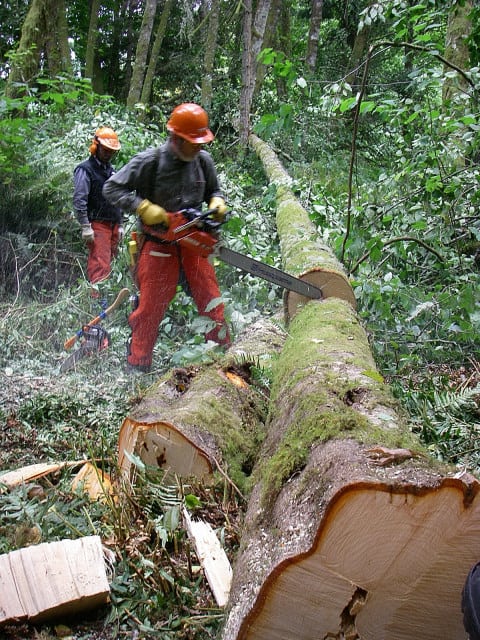
A Hokitika forestry worker was off work for months with debilitating spinal fractures, bruising, and kidney injuries after he was hit by a log while in a designated safe area in New Zealand.
According to a report from the New Zealand Department of Labor, his employer, Thomas Logging, Ltd., was fined $17,000 in the Greymouth District Court and ordered to pay reparations of $20,000 following the accident in the Kaniere Forest Block near Hokitika last September.(WCxKit)
The employee was sharpening his chainsaw in an area of the site designated for employees and visitors because it was originally located away from any hazards. However, the layout of the site had been changed two days prior to the accident. This meant the safe area was no longer in a safe place.
At the same time, another employee was using an excavator nearby to clear cut logs. A 5.5 meter log came loose from the excavator hitting the employee in the back, causing his injuries.
“The company carried out a hazard identification before the work started. Then, two days before the incident, they changed the layout of the work area without changing the designated safe area and that put employees in danger of being hit by moving logs and machinery,” said Christchurch Service Manager, Margaret Radford.(WCxKit)
“This employee could have been spared these debilitating injuries if a simple hazard identification was done again after the site layout was changed, and the safe area moved,” Radford added.
Author Robert Elliott, executive vice president, Amaxx Risk Solutions, Inc. has worked successfully for 20 years with many industries to reduce Workers Compensation costs, including airlines, healthcare, printing/publishing, pharmaceuticals, retail, hospitality and manufacturing. See www.LowerWC.com for more information. Contact: Info@ReduceYourWorkersComp.com.
Our WORK COMP Book: www.WCMANUAL.com
Do not use this information without independent verification. All state laws vary. You should consult with your insurance broker or agent about workers comp issues.
©2011 Amaxx Risk Solutions, Inc. All rights reserved under International Copyright Law. If you would like permission to reprint this material, contact Info@ReduceYourWorkersComp.com.
New Zealand’s Accident Compensation Corporation (ACC) welcomed the conviction of Kerol Ann Smith-Goodwill who pleaded guilty in the Pukekohe District Court this month to defrauding ACC.
According to an ACC report, Smith-Goodwill, unemployed of Waiuku, was convicted of six charges – five for making a false statement to ACC, and one for willfully misleading ACC. (WCxKit)
Smith-Goodwill pleaded guilty to all charges and was sentenced to 80 hours of community work. She was also ordered to pay reparation of $16,658.14.
The charges related to a nine-month period between July 2008 and March 2009 during which Smith-Goodwill worked fulltime while continuing to receive weekly compensation from ACC.
Weekly compensation was paid by ACC on the basis that Ms Smith-Goodwill was fully unfit for work, as the result of a back injury received in July 2008.
When weekly compensation was granted, Smith-Goodwill was advised she must tell ACC if she resumed any type of employment and was reminded of this obligation in subsequent meetings with ACC staff. However, during these meetings she made no mention of the fact that she had started fulltime work with Ecomist Systems Ltd. as a sales representative.
While working full-time, Smith-Goodwill continued to supply medical certificates to ACC, declaring she remained fully unfit for work.
ACC launched an investigation into Smith-Goodwill’s situation as a result of information received. When interviewed by an ACC representative, Smith-Goodwill said she understood the requirement to advise ACC if she returned to work. (WCxKit)
She also said she knew she should not have been working while obtaining medical certificates saying she was unable to work.
Author Robert Elliott, executive vice president, Amaxx Risk Solutions, Inc. has worked successfully for 20 years with many industries to reduce Workers Compensation costs, including airlines, healthcare, printing/publishing, pharmaceuticals, retail, hospitality and manufacturing. See www.LowerWC.com for more information. Contact: Info@ReduceYourWorkersComp.com.
Do not use this information without independent verification. All state laws vary. You should consult with your insurance broker or agent about workers comp issues.
©2011 Amaxx Risk Solutions, Inc. All rights reserved under International Copyright Law. If you would like permission to reprint this material, contact Info@ReduceYourWorkersComp.com.