Find Out About Quality Claims Handling Services

MSP/MIR Compliance

Onsite Wellness Clinics, Nurse Triage, Pre-employment Screening

Physical Therapy and Rehabilitation


Work Comp Cost Reduction Book/Manual


10 Adjuster Mistakes Resulting in Unintended Consequences of a Wrong Claim Reporting Decision


It seemed like a simple enough claim. The employee, a truck driver, was driving along when a car pulled in front of him from a stop sign. The big Mack knocked the car out of its path, while the truck driver brought the truck to a stop. The truck driver jumped out of the cab and ran over to check on the woman and her children in the car. The ambulance arrived and took the family away. When the police interviewed the truck driver and asked if he was hurt, he said, "No." The next morning the truck driver awoke with a very sore neck and aching back.
 
 
It was three weeks to Christmas and the truck driver, having a family to care for, continued to work each day taking heavy doses of Tylenol. By Christmas he was in constant agony and with his wife's encouragement, went to the local emergency room. The doctor diagnosed both back and neck strain, and told him he could not work. The employee reported the claim to the trucking company. The trucking company clerk, whose job it was to report all workers comp claims to the third party administrator (TPA), noted the accident occurred three weeks prior to being reported. The trucking company's policy with its employees was for all injuries to be reported within five days of the date of injury. When the clerk reported the accident to the TPA, she told the adjuster the claim should be denied, as the police report showed the truck driver was not hurt and failed to report the claim within the employer’s five-day reporting period. (WCxKit)
 
 
The adjuster said, “Okay, if that is what you want,” and promptly sent the truck driver a denial of benefits letter. Unfortunately, the state law where the claim occurred, allows the employee one year from the date of the accident to report the claim. When the truck driver received a denial of benefits letter he immediately hired a lawyer.
 
 
The adjuster knew what the law was, but made a wrong decision, by allowing the employer’s reporting policy to prevail over state law. The adjuster should have immediately advised the reporting clerk that the state statutes give the employee a year to report the injury. The adjuster abandoned decision-making on the claim to the employer, even though the adjuster's knowledge of workers comp statutes was greater than the clerk reporting the claim.
 
 
Since the adjuster denied the claim based on the employer’s wishes (or the WC clerk), no further action was taken.

Ten things the adjuster failed to do:
 

1.      Make 24-hour three-point contact with the employee, employer, and medical provider.

2.      Obtain a recorded statement from the employee regarding the details of the accident and the nature and extent of the employee's injuries.

3.      Obtain documentation on the damage to the truck (to reflect the force of the impact suffered by the driver).

4.      Obtain information on the woman who caused the accident for the purpose of subrogation.

5.      Put the insurance carrier for the other party on notice of the intent to subrogate.

6.      Obtain the doctor's diagnosis and prognosis.

7.      Obtain wage documentation and in order to calculate the indemnity benefit rate.

8.      Establish appropriate reserves for the indemnity and medical cost.

9.      Arrange for the employee to return to work on light/modified duty.

10.  Provide any type of medical management on the claim.


Now, since employee hired an attorney who expects to earn a fee, when the employee was released to light duty following his first doctor’s visit, the attorney failed to convey that information to the adjuster. The attorney arranged for the employee to see a doctor he referred his client to. This new doctor kept the employee off work until the employee, ignoring the doctor's advice, returned to work on his own.
 
 
The attorney waited until the employee was released back to full duty before sending his letter of representation. The attorney-selected doctor gave the employee a small impairment rating from which the attorney would take his fee, plus his percentage of the employee's PPD, for the time the employee was kept off work.
 
 
When the defense attorney strongly recommended the claim be settled, the adjuster had nothing to mitigate the damages. As a part of the settlement agreement, the TPA gave up the right to subrogate against the woman who caused the accident, allowing the employee and his attorney to bring a lawsuit for the traffic accident.
 
 
The employer and/or the clerk did not know the law or understand the consequences of denying compensation on a legitimate claim, even when reported late. What should have been either a medical-only claim or a very minor indemnity claim became a PPD claim, costing at least five times what it should have, because the adjuster abandon her (or his) responsibilities and allowed the employer to make the decision on compensability. The TPA also had to negotiate away the right of subrogation to get the claim settled. With subrogation rights, the entire amount paid by the TPA on the claim could have been recovered. (WCxKit)
 
 
If, as an employer, you do not know all the aspects of the workers compensation statutes in your state, trust the adjuster to make the correct decision. If you question the adjuster's decisions on claims, discuss why they are proceeding in the way they are. Create a partnership with the adjuster in the handling of your claims, but trust the adjuster judgment and knowledge of the law. It is usually a wrong move to handle workers comp claims by what you want rather than by what state statutes require. And, it might be a good idea to train all employees involved in processing workers comp claims to not make suggestions on how a claim ought to be handled.
 

Author Rebecca Shafer
, JD, President of Amaxx Risk Solutions, Inc. is a national expert in the field of workers compensation. She is a writer, speaker, and website publisher. Her expertise is working with employers to reduce workers compensation costs, and her clients include airlines, healthcare, printing/publishing, pharmaceuticals, retail, hospitality, and manufacturing. See www.LowerWC.com for more information. Contact: RShafer@ReduceYourWorkersComp.com.


Do not use this information without independent verification. All state laws vary. You should consult with your insurance broker or agent about workers comp issues.
 
©2011 Amaxx Risk Solutions, Inc. All rights reserved under International Copyright Law. If you would like permission to reprint this material, contact Info@ReduceYourWorkersComp.com.
Posted in Coordinating Medical Care, Legal Doctrines, Medical Issues, Settling WC Claims, Travel and Overseas Employees |


Comments Off

Setting up a Remote Occupational Clinic Has Challenges


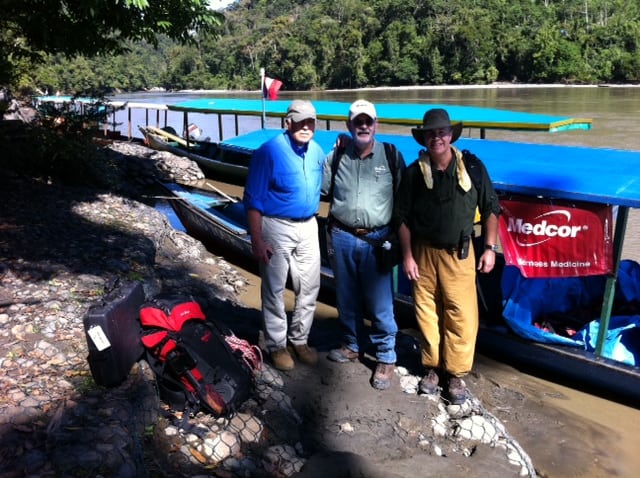
Peru – Medcor CEO Philip Seeger testing Medcor’s telemedicine software with an Imarsat/BGAN satellite system on the bank of the Elto Madre river in the Amazon jungle. Seeger and his team also tested their telemedicine system with Iridium sat phones.
 
 
Working in the creature-infested and disease-prone Amazon jungle is not all just fun and games – no indeed – someone might get hurt (just as they might at a less remote worksite).
 
 
And that is what companies such as Medcor are for.


Founded in 1984, Medcor operates more than 170 non-traditional clinics located on-site in client locations around the United States. Medcor’s staff, systems, and software in these clinics help employers control costs, improve outcomes, provide rapid access to medical care when necessary and avoid claims when they are not necessary.  This means planning ahead, even when the worksite is very different from the typical office.
 
 
Privately held with 400 full-time and 400 part-time employees, Medcor does $54 million in business per year, and claims to save its clients several hundred million in workers compensation and general health care costs every year. In addition to its on-site clinics, the company provides telephonic injury triage to more than 80,000 triage worksites from a wide variety of industries across the US.
 
 
Although its core business is focused on providing on-site medical clinics to large worksites and providing injury triage to small worksites across the country, Medcor has a great deal of expertise in the fascinating field of wilderness medicine.
 
 
The company provides on-site medical services at Yellowstone National Park, supports a clinic at the base camp of Mount Everest, and has provides medical services to remote projects such as oil pipelines, windfarms, and highway construction. The company has provided medical support to government projects on Kwajalein and Midway Island in the pacific ocean. Medcor has also has served those affected by hurricanes Katrina and Rita, and provided on-site medical services at the World Trade Center after 9-11. Medcor is currently deployed helping the flood relief efforts in Minot, ND.
 
Currently, Medcor is working for the Zoological Society of San Diego. The society hired Medcor, to establish a wilderness medical program to support a research station in the jungle, at Cocha Chashu in the Amazon jungle of Peru. Zoo officials asked Medcor to help assess the medical needs and response options for people at the station as it is very remote, requiring four days travel from the U.S., the last two being by small boats 10 hours a day.
 
The zoo is assessing the risks to the participants — zoo employees or visitors — and planning to provide for the safety of everyone there. These goals include providing medical services to the program.
 
 
Executive Vice President Curtis Smith says there are many challenges to such a remote project.
 
 
First, he says, most medical providers are trained and experienced to work within a broader system. Here, there is a 911 system to call in emergencies, there are specialists to refer to or to consult with by phone. In the US, X-ray, lab, and other diagnostic tools are readily available, and well-stocked pharmacies exist nearby. If on-site clinic staff in the US rely on those off-site resources too much, they negate many of the benefits of resolving cases on site, avoiding unnecessary claims, and reducing costs, Smith says.
 
 
If they rely on those systems in remote locations, they are really in trouble, Smith says. Clinics operating in remote locations cannot rely on traditional off-site resources, forcing the on-site staff to be self-reliant. Those efficiencies help Medcor’s on-site clinics perform better back in the U.S.
 
 
13 common challenges to setting up a remote medical clinic include:
  1. Recognizing the hazards and limitations of the area.
  2. Determining a scope of care that minimizes risks and costs – then writing standards and protocols to match.
  3. Figuring out the logistics of getting there and back routinely, and during medical emergencies..
  4. Determining the equipment and supplies that are truly needed and what is extraneous.
  5. Developing practical reliable emergency plans based on the logistics, staff, and supplies that are available.
  6. Establishing the method, reliability, security, and cost of various communication methods.
  7. Selecting the right staff – not only in terms of medical skill and experience, but with the personality to get along with the client team at the remote site, and the character to function independently.
  8. Training the staff in advance of deployment so they are not learning the basics, such as equipment, software and procedures, on the job. The on-site staff will have to learn the specifics of each site once there, which will be tough enough.
  9. Handling turnover – in the event that the medical staff leaves, for whatever reason.
  10. Finding valuable and rewarding work for the medical staff to do when not treating patients so the staff stays engaged and motivated to remain on the project.
  11. Establishing clear goals with clients – often they, too, do not understand everything about the remote site.
  12. Language barriers between the employees and local medical providers, if not English speaking, need to be addressed.
 
 
Another common challenge to setting up remote clinics is being underbid by people who grossly under estimate the work involved and resources needed.
 
Each site and project can be very different from others. Long-term assignments are very difficult to staff because the medical personnel miss their families, friends, and “professional life,” Smith says. Short term assignments are difficult because they interrupt or prevent long term work elsewhere.

Author Rebecca Shafer
, JD, President of Amaxx Risks Solutions, Inc. is a national expert in the field of workers compensation. She is a writer, speaker, and website publisher. Her expertise is working with employers to reduce workers compensation costs, and her clients include airlines, healthcare, printing, publishing, pharmaceuticals, retail, hospitality, and manufacturing. See www.LowerWC.com for more information. Contact: RShafer@ReduceYourWorkersComp.com.


Do not use this information without independent verification. All state laws vary. You should consult with your insurance broker or agent about workers comp issues.
 
©2011 Amaxx Risk Solutions, Inc. All rights reserved under International Copyright Law. If you would like permission to reprint this material, contact Info@ReduceYourWorkersComp.com.
Posted in Coordinating Medical Care, Medical Cost Containment & Managed Care, Travel and Overseas Employees, WC in Other Countries (International) |


Comments Off

San Diego Zoo and Medcor Set Up Telemedicine Program for Employees in Amazon


Johan Perez checks depth with bamboo pole in shallow part of the muddy Elto Madre river. On board in the red 55 gallon drum, is fuel — one of two such drums on the riverboat traveling roughly 20 hours each way to reach the research station at Cocha Chashu. Between the two boats on this mission, the Medcor team carries a spare outboard engine and 4 props. On this trip, both boats had had to replace propellers damaged by submerged logs and shifting shallow bottoms. Every few hours, they must stop to clean silt from the engine intake. And, in some places, when the current is too strong to manually push the boat, the team is forced to backtrack to find a deeper channel.
 
 
When the San Diego Zoological Society was chosen by the Peruvian government to manage its research station in the Amazon jungle — the trackless Manu National Park — it had the responsibility of providing emergency medical care to its staff.
 
 
The hazards: poisonous snakes and crocodiles, malaria and yellow fever, parasites and fungus, as well as normal strains, sprains and lacerations.(WCxKit)
 
 
Helicopter evacuation? Forget it. The dense jungle canopy, long distance and bad weather in the rainy season make it next to impossible – even if the nearest helicopters weren’t on the other side of a mountain range.
 
 
So, the zoological society hired Medcor, an on-site medical firm based in Illinois, to help establish a wilderness medical program to manage a research station in the jungle, at Cocha Chashu in the Amazon jungle of Peru. The zoo contracted with the Peruvian government to help manage the site. Since the zoo has worked with Medcor for years in San Diego, they already had experience working together and had proved the effectiveness of this kind of risk management in other projects.
 
 
June 8, Medcor founder and CEO, Philip Seeger, and EVP Curtis Smith traveled to the jungle with the zoo’s risk manager, David Matthias, to conduct a first-hand assessment of all the travel and evacuation logistics. Medcor needed to assess the medical needs and response options for people at the station that is so remote it requires four days travel from the United States each way, the last two by small boats, 10 hours a day.
 
 
This means the 20-year-old Cocha Chashu station, according to Medcor executive vice president, Curtis Smith, is two days to the nearest town. So telemedicine is essential, particularly when the science group is too small for an onsite medical professional. Research groups vary from two people up to 30, staying from days to months.
 
 
While navigating the rivers, they test two different satellite systems to connect to Medcor’s existing triage call center. Medcor’s telemedicine service is already used by over 80,000 worksites (and many mobile workers) in the US and is available 24/7. Connecting from the jungle involves data, audio and video links – all of it battery and solar powered.
 
 
Shortly after arriving at the station, the Medcor team had opportunity to use their triage service on a real patient. The first on-site injury? An insect bite (presumed to be a spider) that was becoming inflamed. Treatment was given immediately and the patient recovered without complication, Smith said.
 
 
Medcor is also working with locals who provided travel and support services for the station. The project includes stocking the station with essential medical supplies; protecting them from insects, heat and humidity is key to having them available when needed. Supplies in place could be used by researchers being directed by Medcor clinicians remotely, or used by Medcor staff who travel on-site to support large groups.
 
 
Wilderness medicine is not new for the company, which supports a clinic at the base camp of Mount Everest, provides on-site medical services at Yellowstone National Park, and has ranged far afield with services on Pacific islands, as well as remote areas in the US. “Of course wilderness medicine is specialized,” says CEO Philip Seeger, “but there are many similarities to our core on-site services in the US, too, Most of the injuries we deal with are still sprains and strains, and we have to train and support our staff, get reports to our clients on time, and stay in compliance with HIPAA and other regulations. Delivering our services remotely forces us to become more efficient overall – many of those improvements also benefit our patients and clients using our services here is the US.”
 

Author Rebecca Shafer
, JD, President of Amaxx Risks Solutions, Inc. is a national expert in the field of workers compensation. She is a writer, speaker, and website publisher. Her expertise is working with employers to reduce workers compensation costs, and her clients include airlines, healthcare, printing, publishing, pharmaceuticals, retail, hospitality, and manufacturing. See www.LowerWC.com for more information. Contact: RShafer@ReduceYourWorkersComp.com.


Do not use this information without independent verification. All state laws vary. You should consult with your insurance broker or agent about workers comp issues.
 
©2011 Amaxx Risk Solutions, Inc. All rights reserved under International Copyright Law. If you would like permission to reprint this material, contact Info@ReduceYourWorkersComp.com.
Posted in Medical Cost Containment & Managed Care, Travel and Overseas Employees, WC in Other Countries (International) |


Comments Off

Workers Comp Medical Crew Cares for Employees in Amazon Jungle


Not quite what U.S. professional travelers would call business class in Atalaya, Peru — where Medcor staff stayed befoe starting the wo-day river trip through Boca Manu, Peru and on to the Cocha Cashu research station.
 
Indeed, whether in the Peruvian jungle or at the Mount Everest base camp, Medcor is there for more than 170 worksites, including factories, distribution centers, studios, farms, and mobile or temporary units.
 
 
Founded in 1984 by CEO, Philip Seeger and COO Ben Petersen, Medcor operates many onsite clinics across the United States to support employers who want to control costs, improve outcomes, provide rapid medical response when it is really necessary and avoid claims when they are not necessary – and this means planning ahead even when the worksite is far from the typical office.
 
 
Privately held with 400 full-time and 400 part-time employees, Medcor does $54 million in business per year. The company boasts seasonality and flex work to meet changing client needs – for example, the retail distribution industry during the holiday season. In addition to itson-site clinics, Medcor also serves more than 80,000 worksites with telemedicine.
 
 
Although its core business is focused on providing on-site medical clinics to large worksites and providing injury triage to small worksites across the country, Medcor has a great deal of expertise in the fascinating field of wilderness medicine.
 
 
The company provides on-site medical services at Yellowstone National Park, operates a clinic at the base camp of Mount Everest and has operated clinics on pipelines and windfarms and projects in locations  such as Midway Island, of the northwest Hawaiian islands. Medcor has also has served those affected by hurricanes Katrina and Rita, and provided on-site medical services at the World Trade Center after the events of 9-11. Medcor is currently back on site sat the World Trade Center supporting rebuilding projects.
 

Not your typical day at the office for Medcor team members in Peru where they are setting up a remote clinic to support research scientists. From left, Phillip Seeger, Medcor founder and CEO and Dave Matthias, risk manager for the San Diego Zoological Society.

 
There are also a variety of other similar companies that provide remote medicine services. Many of them are highly specialized, focusing on evacuations, off-shore oil rigs, pipelines or military bases.
 
 
Medcor Executive Vice President Curtis Smith notes there are at least eight benefits of having an onsite clinic for employers with remote locations:
  1. Improved medical outcomes for employees and workers onsite.
  2. Improved morale and confidence for employees and workers onsite (which, in turn supports recruiting and retention at the remote site).
  3. When done properly, remote medical crews reduce costs and liability.
  4. Avoids unnecessary travel costs by resolving cases on site.
  5. Better screening and monitoring of on-site staff, including early intervention of injuries and illness.
  6. For patients who do need evacuation, there is better planning, stabilization, prep, and continuity of care that helps reduce complications. For example, on the Amazon trip, a scout team discovered other river evacuation routes for emergencies before they happen.
  7. There is less litigation because outcomes are better, documentation is better, and the employer is more likely to be in compliance with applicable laws and best practices.
  8. It is morally the right thing to do.
 
 
Benefits may extend further for U.S.-based companies including compliance with U.S.-based workers compensation and other laws which are likely to be claimed as an applicable standard for expat employees and the parity of service/benefits with other employees who are not in remote locations.

Author Rebecca Shafer
, JD, President of Amaxx Risks Solutions, Inc. is a national expert in the field of workers compensation. She is a writer, speaker, and website publisher. Her expertise is working with employers to reduce workers compensation costs, and her clients include airlines, healthcare, printing, publishing, pharmaceuticals, retail, hospitality, and manufacturing. See www.LowerWC.com for more information. Contact: RShafer@ReduceYourWorkersComp.com.
 

Our WC Book:  http://www.wcmanual.com
WORK COMP CALCULATOR: http://www
.LowerWC.com/calculator.php
 
Do not use this information without independent verification. All state laws vary. You should consult with your insurance broker or agent about workers comp issues.
 
©2011 Amaxx Risk Solutions, Inc. All rights reserved under International Copyright Law. If you would like permission to reprint this material, contact Info@ReduceYourWorkersComp.com.
Posted in Medical Cost Containment & Managed Care, Travel and Overseas Employees, WC in Other Countries (International) |


Comments Off

Medcor Jungle Team Cuts Down WC Costs at Peruvian Science Station by Providing On-site Remote Care


The Medcor team of (from left) Dave Matthias, risk manager for the Zoological Society of San Diego, Curtis Smith, executive vice president of Medcor, and Phillip Seeger, Medcor founder and CEO, readies for two 10-hour days of river travel to their destination in the Peruvian rainforest where they will medically support a team of research scientists.

 
It is one thing when an employee slips and sprains an ankle – but what would your company do if that employee was in the deepest part of the Amazon basin – you know, with, like, SNAKES!?
 
 
The answer is your company probably has no idea what to do – that is why smart businesses are hiring third party medical teams to manage remote location projects.
 
 
One such smart company is the Zoological Society of San Diego. It hired Medcor, an on-site medical firm, to establish a wilderness medical program to manage a research station at Cocha Cashu in the Peruvian Amazon jungle. Zoo officials asked Medcor to help assess medical needs and response options for a team of scientist and support staff at the station as it is very remote, requiring four days travel from the U.S., the last two being by small boats 10 hours a day.
 
 
According to Medcor executive vice president, Curtis Smith, the Cocha Cashu research station has been operating for about 20 years and the zoo just recently contracted with the Peruvian government to help manage it. For this Amazon project, research groups may vary from two to 30 people, staying from days to months. Hazards include a wide variety of snakes and insects, wild animals, and a risk of malaria, yellow fever, and other diseases, on top of many types of parasites and fungus — all this, along with temperature extremes and the usual work-site hazards of strains and sprains, slips and falls, and so on. Access to the park is restricted to only authorized researchers and a few indigenous people who live there without contact with the outside world.
 
 
The research station fits into the zoo’s broader mission of protecting and researching animals and plants, Smith says. The zoological society has a long history of conducting research in a wide variety of animal and plant topics, including preservation of endangered species, environmental sustainability, and wildlife education. The zoological society has conducted research throughout the world, including projects such as working with utility companies to minimize wind farms impact on migrating birds. The station at Cocha Cashu in Peru is so remote and untouched that is provides rare research opportunities, including baselines and comparisons for studies elsewhere.
 
 
Now that the zoo is assuming responsibilities for managing the station, they want to understand the risks to the participants — zoo employees or visitors — and provide for the safety of everyone there. These goals include bringing medical services to the program.
 
 
The service is based on extending Medcor’s existing telemedicine/triage services into the Manu National Park, which covers nearly 20,000 square kilometers of jungle. Medcor's triage service is already used in more than 80,000 worksites in the US, meaning Medcor is responsible for the health of workers at 80,000 locations. Additionally, Medcor provides on-site medical care at more than 170 factories, distribution centers, studios, farms, and mobile or temporary sites.
 
 
Founded in 1984 by CEO, Philip Seeger and COO Ben Petersen, the company operates with the belief that all employers want to control costs, improve outcomes, provide rapid response when it is really necessary and avoid claims when they are not necessary – and this means planning ahead even when the worksite is far from the typical office.
 
 
Privately held with 400 full-time and 400 part-time employees, Medcor does $54 million in business per year. The company boasts seasonality and flex work to meet changing client needs – for example, the retail distribution industry during the holiday season.
 
 
Through the use of telemedicine, Medcor reaches note just remote locations, but also employees working in worksites to small to support an on-site clinic, working on third shift when there are fewer clinics available, and even mobile workers. Telemedicine delivered through well-tested simple phone connections (or more complex satellite hookups) can be more practical and cost effective in many situations than providing on-site medical staff. In all cases, understanding the injury or illness and making a good decision about on-site treatment or the possibility of off-site treatment and evacuation is critical to ensuring good clinical outcomes and to avoiding unnecessary costs and claims.
 
 
To begin Medcor’s involvement with this project, Smith left for Peru with the zoo’s risk manager, David Matthias, to conduct a first-hand assessment of all the travel and evacuation logistics. They surveyed the site and tested two different satellite systems. Medcor also works with local personnel who have provided travel and support to the station in the past.
 
 
Smith says, “I’d call it more of a ‘business expedition’ than a ‘business trip.' We are bringing with us everything we need to live in the Amazon jungle for four to six days, including our tents, food, water purification systems — and our laptops!”
 
 
Matthias, a former Marine and law enforcement officer, says, as risk manager, he assesses all kinds of risks including health, safety, financial, legal, and helps create policies and protocols to address and mitigate the risks. He also helps place liability coverage/insurance for these projects and notes that safety and prevention are key components — as is working with specialized partners, such as Medcor, to address medical support.
 
 
Matthias made the trip to Cocha Cashu to understand firsthand the logistics of getting researchers, staff, students and supplies into the station. The station operates with very low environmental impact, with staff living in tents and relying on solar power. He also met local rangers from the Peruvian national park where the station is located and interviewed researchers who worked in the area before.
 
 
Medcor provides at least six support options for the station:
1.    Medical training for local staff and rangers.
2.    Stocking the station with essential medical supplies and equipment.
3.    Preventative measures, such as physical exams, fitness criteria and vaccinations prior to travel.
4.    Providing medical support for the station, based on extending Medcor’s existing telemedicine and triage services into the site via satellite phone, video and data links. (This is critical because the dense jungle canopy, distance, bad weather and lack of aircraft sources make helicopter evacuations nearly impossible.)
5.    Documentation and reporting with Medcor’s proprietary electronic medical record system, which is encrypted and HIPAA compliant.
6.    Sending qualified medical staff to work on-site supporting researchers at the station.
 
This is the first of several glimpses Medcor and the Zoological Society of San Diego we be sharing with our readers.

Author Rebecca Shafer
, JD, President of Amaxx Risks Solutions, Inc. is a national expert in the field of workers compensation. She is a writer, speaker, and website publisher. Her expertise is working with employers to reduce workers compensation costs, and her clients include airlines, healthcare, printing/publishing, pharmaceuticals, retail, hospitality, and manufacturing. See www.LowerWC.com for more information. Contact: RShafer@ReduceYourWorkersComp.com.
 
 
SUBSCRIBE To our Newsletter: Workers Comp Resource Center Newsletter
 
Do not use this information without independent verification. All state laws vary. You should consult with your insurance broker or agent about workers comp issues.
 
©2011 Amaxx Risk Solutions, Inc. All rights reserved under International Copyright Law. If you would like permission to reprint this material, contact Info@ReduceYourWorkersComp.com.
Posted in Medical Cost Containment & Managed Care, Medical Issues, Risk Management, Travel and Overseas Employees |


Comments Off

NEW ZEALAND Workers Comp 101 Basics


New Zealand is unique in having a national “no fault" accident compensation scheme (termed ACC) effectively covering all accidents, howsoever caused, on a 24/7 basis.
 
 
However, the main feature is that no common law claims can be brought in New Zealand Courts for death or bodily injury even if caused by another person’s provable negligence. Being such a  small and confined country NZ can apply the  "no fault"  principle easier than two tiered jurisdictions or those with federal and state governments which cross over and create contradictory legal regimes  or where people can choose where they  sue.(WCxKit)
 
 
But this provision is counter acted by the ACC scheme providing coverage for:
 
 
1. All work related accidents.
 
2. All non-work accidents including sporting and recreational injuries.
 
3. All motor related accidents
 
4.  Approved medical/hospital and rehabilitation expenses incurred as a result of the above
 
Implications For Tourists To New Zealand
 
 
If any tourist is injured they are entitled to coverage for the medical costs, but not any lost earnings and cannot claim damages in any New Zealand Court.
 
 
However limited action may be taken under the Health and Safety legislation if gross negligence by a third party is provable and limited reparations are awarded by the appropriate Court
 
 
In view of these imitations all tourists should arrange comprehensive travel insurance to insure their entire journey and not make any assumptions about the extent of New Zealand`s ACC regime.
 
Employees Who are Injured Working Full or Part Time in New Zealand
 
 
As they are legally employed, if employees suffer any death or bodily injury, they are fully entitled to the benefits of ACC as explained above
 
 
New Zealand Websites of Interest
 
 
People or entities interested in New Zealand from a tourist or business aspect may find the following Government websites of interest. (WCxKit)
 
 
Accident Compensation Corporation:  www.acc.co.nz
 
Ministry of Foreign Affairs and Trade:  www.mfat.govt.nz
 
Ministry of Tourism:  www.tourism.govt.nz
 
New Zealand Trade and Enterprise:  www.nzte.govt.nz
 
 
Author Rebecca Shafer, JD, President of Amaxx Risks Solutions, Inc. is a national expert in the field of workers compensation. She is a writer, speaker and website publisher. Her expertise is working with employers to reduce workers compensation costs, and her clients include airlines, healthcare, printing/publishing, pharmaceuticals, retail, hospitality and manufacturing.
Contact: 
RShafer@ReduceYourWorkersComp.com or 860-553-6604.

WC IQ TEST:  http://www.workerscompkit.com/intro/
WORK COMP CALCULATOR:   http://www.LowerWC.com/calculator.php
MODIFIED DUTY CALCULATOR:   http://www.LowerWC.com/transitional-duty-cost-calculator.php
 
WC GROUP:  http://www.linkedin.com/groups?homeNewMember=&gid=1922050/
SUBSCRIBE: 
Workers Comp Resource Center Newsletter

Do not use this information without independent verification. All state laws vary. You should consult with your insurance broker or agent about workers comp issues.

©2010 Amaxx Risk Solutions, Inc. All rights reserved under International Copyright Law. If you would like permission to reprint this material, contact
Posted in Employment Law Issues, Travel and Overseas Employees, WC in Other Countries (International) |


Comments Off

Burn Pits Are Dangerous for Workers and Military Troops


American employers working oversee as contractors to the United States Government must purchase a special kind of workers compensation insurance coverage known as the Defense Base Act (DBA). The DBA is a part of the Longshore and Harbor Workers Compensation Act administered by the U. S. Department of Labor. The DBA is designed to protect civilian employees working outside of the United States.
 
It is required for all:
 
1.      Contractors on military bases or reservations
2.      Americans working on non-military projects such as roads, schools, harbors and dams if they are doing so for any agency of the United States government
3.      Any employee engaged in public works or a military contract with a foreign government which has been deemed necessary to the U.S. National Security.
4.      Anyone providing services funded by the U.S. Government outside of the realm of regular military issue or channels
5.      Any subcontractor involved in a contract with any of the above (WCxKit)
 
 
The wars in Afghanistan and Iraq have resulted in numerous contractors both multinational companies and small employers obtaining government contracts to provide services to the military. One of the services the United States government has contracted out is the disposable of waste. Neither Afghanistan nor Iraq has ready available incinerators. The solution to this by the contractors in both countries has been to dig huge pits and burn the waste. These open burn pits have created a bonanza for plaintiff attorneys in the United States because of the health problems the burn pits create.
 
 
The reason the open burn pits have created a serious health problem is the type of waste that was being burned including:
 
1.      Plastics
2.      Pesticides
3.      Asbestos insulation
4.      Tires
5.      Hydraulic fluids
6.      Biohazard materials
7.      Chemicals
8.      Paints
9.      Solvents
10. Petroleum based products
11. Polyvinyl chloride pipes
12. Styrofoam
13. Medical waste
 
 
The smoke, air borne ash, dust and fumes from the open burn pits contain harmful toxins which result in a litany of medical conditions including, but not limited to:
 
1.      Cancer of the lungs, skin, bone, brain
2.      Leukemia
3.      Pulmonary injuries
4.      Heart conditions
5.      Skin infections
6.      Chronic bronchitis
7.      Asthma
8.      Chronic cough
9.      Breathing restrictions
10. Nose bleeds
11. Throat infections
12. Lesions
13. Vomiting
 
 
The burn pits released many toxins including both sodium dichromate and hexavalent chromium which can have devastating results when humans are exposed to them.
 
 
The burn pits have created two types of claims that are being aggressively pursued by the attorneys. The employees of the contractors are pursuing workers compensation claims. The active duty members of the military and veterans of the wars in Afghanistan and Iraq can not pursue workers' compensation claims, but they can pursue third party liability claims against the contractors who operated the burn pits.
 
 
The major contractors who are on the receiving end of the workers compensation claims and third party liability claims include Halliburton; KBR Inc., Kellogg, Brown & Root Services, Inc., and Kellogg, Brown & Root, LLC. There are numerous other small contractors who have also received DBA work comp claims, but the multinational large employers are the target defendants being pursued by the plaintiff attorneys. Many of the plaintiff attorneys are running television commercials in Houston (where Halliburton and KBR are located) and other cities near military bases that have deployed troops to Afghanistan and Iraq soliciting both work comp claims from the employees of the civilian contractors and liability claims from the members of the military. AIG is the workers compensation insurer for most employers with DBA coverage.
 
 
Per one congressional study, there were at one time at least 84 burn pits in Afghanistan and Iraq. Due to the potential health issues from the burn pits, the American Lung Association got involved and issued a strong recommendation to discontinue the use of burn pits in Afghanistan and Iraq. As a result of the health issues the burn pits were creating, the National Defense Authorization Act of 2009 requires the military to look for alternative means of waste disposal. The National Defense Authorization Act also requires the Department of Defense to determine the effects of the burn pits on the troops. The plaintiff attorneys and their clients got a boost on October 15, 2010, when the U.S. Government Accountability Office reported on four burn pits it surveyed in Iraq that they were not being operated per the standards outlined in the National Defense Authorization Act of 2009.
 
 
As all of the medical conditions noted above can be the result of many causes beside burn pits, it is expected that most, if not all of the work comp claims and liability claims from the burn pits will be disputed. That does not stop the plaintiff lawyers from pursuing more clients with the suggestions that contractor employees, military members and veterans of Afghanistan and Iraq should pursue damages for “fear of future disease”, “emotional distress”, “medical monitoring” and actual physical injuries.
 
 
It should be noted that the insurers of employers of civilian contractors who were not among the companies operating the burn pits, but who have received workers' compensation claims from employees who were exposed to the smoke and fumes of the burn pits, can pursue subrogation claims against the burn pit operators. (WCxKit)
 
 
It will be interesting to see how the burn pit claims play out over the next few years. At this point it is too early to tell if the burn pits will turn into gold mines for the plaintiff attorneys or if the burn pits claims will be limited to a few hundred claims that do not pay for all the advertising the plaintiff attorneys have done.
 

Author Rebecca Shafer, JD, President of Amaxx Risks Solutions, Inc. is a national expert in the field of workers compensation. She is a writer, speaker and website publisher. Her expertise is working with employers to reduce workers compensation costs, and her clients include airlines, healthcare, printing/publishing, pharmaceuticals, retail, hospitality and manufacturing.  RShafer@ReduceYourWorkersComp.com

WORK COMP CALCULATOR:   http://www.LowerWC.com/calculator.php
MODIFIED DUTY CALCULATOR:   http://www.LowerWC.com/transitional-duty-cost-calculator.php
 
WC GROUP:  http://www.linkedin.com/groups?homeNewMember=&gid=1922050/
SUBSCRIBE: 
Workers Comp Resource Center Newsletter

Do not use this information without independent verification. All state laws vary. You should consult with your insurance broker or agent about workers comp issues.

©2010 Amaxx Risk Solutions, Inc. All rights reserved under International Copyright Law. If you would like permission to reprint this material, contact
Info@WorkersCompKit.com.
Posted in Insurance Issues, Rates, Premiums, Medical Issues, Safety and Loss Control, Settling WC Claims, Travel and Overseas Employees |


Comments Off

Your Workforce is Global But is Your Insurance Program


With globalization  and international trade increasing, more United States-based organizations are sending their employees to other countries on both short- and long-term assignments.  For employers sending their employees abroad to work, making sure employees have workers' compensation insurance and appropriate liability insurance is as important as ensuring their physical security and making sure they are up to date with medical needs like vaccinations.  

Sending anyone  abroad without suitable insurance is a disaster waiting to happen because the organization is responsible for its U.S. workers when they are injured anywhere in the world. There are many  issues to consider when a company has employees traveling to foreign countries or stationed outside the United States.  Let's look at workers' compensation insurance first. 

The first step  is to make sure your domestic workers' comp carrier will extend coverage to the territories where your employees may be traveling.  Employees need to be covered in all countries they are visiting or conducting business.  The position on this issue will vary by carrier. For instance, coverage for an occurrence in Canada varies, and not all carriers provide coverage under a controlled master program.  If you're aware of specific travel plans, report at plan inception, an estimated amount of payroll.  (workersxzcompxzkit)

Make sure all  subsidiaries, including those outside the U.S., are covered.  That is, the words, "the named insured"  must include all foreign subsidiaries.  Also, include all employees from foreign U.S.  Consider placing those employees with a U.S. operation if they will be in the U.S. longer than a few days so they will be covered under the United States workers' comp policies.

Podcast/Webcast: How To Prevent Fraudulent Workers' Compensation Claims Click here: http://www.workerscompkit.com/gallagher/podcast/Fraudulent_Workers_Compensation_Claims/index.php

FREE WC IQ Test: http://www.workerscompkit.com/intro/
WC Books: http://www.reduceyourworkerscomp.com/workers-comp-books-manuals.php
WC Calculator:
http://www.reduceyourworkerscomp.com/calculator.php
 

Do not use this information without independent verification. All state laws vary. You should consult with your insurance broker or agent about workers' comp issues.

©2009 Amaxx Risk Solutions, Inc. All rights reserved under International Copyright Law. If you would like permission to reprint this material, contact Info@WorkersCompKit.com

Posted in Travel and Overseas Employees |


Comments Off

The Defense Base Act and Borrowed Servant Rule Highlight Key Workers Comp Federal Issues


Tom Robinson, J.D. a noted authority for Larson’s Workers’ Compensation Law  (LexisNexis) and Larson’s Workers’ Compensation, Desk Edition (LexisNexis).

The Defense Base Act and Borrowed Servant Rule
Tort Claim of Contract Worker Injured in Iraq Fails
Here’s what Tom Robinson, J.D., writer for Lexis Nexis Workers Comp Law Center reveals . . .

Here’s What Happened
Research Triangle Institute  (RTI) contracted to rebuild municipal water and sewage facilities in Iraq following the 2003 United States invasion. RTI obtained Ladd’s services as a civilian engineer by contract with his direct employer, Chemonics International, Inc. (Chemonics). Ladd was seriously injured in Iraq when his vehicle’s left front tire blew, causing the vehicle to plunge into a canal.  
He and his wife  (the Ladds) subsequently sued RTI, contending in relevant part that RTI had failed to supply vehicles for operations in Iraq consistent with those promised during orientation; that Ladd’s driver, allegedly an RTI employee, had been negligent; and that the vehicle in which Ladd had been driven was defective or in poor condition. 

RTI raised the  affirmative defense that Ladd was receiving workers’ compensation benefits under the provisions of the Defense Base Act, 42 U.S.C. § 1651 (the DBA), which constituted his sole remedy. The district court awarded RTI summary judgment, finding that Ladd was a statutory employee of RTI under the borrowed servant doctrine and that the suit was barred under the DBA.  The Ladds appealed.

Here’s How the Court Ruled
In Ladd v. Research Triangle Institute,  2009 U.S. App. LEXIS 14848 (4th Cir. July 2, 2009), affirmed the district court’s decision.  The Fourth Circuit first observed that the DBA provides that “the provisions of the Longshore and Harbor Workers’ Compensation Act [33 U.S.C. 901 et seq. ("the LHWCA")] shall apply in respect to the injury or death of any employee engaged in any employment . . . under a contract entered into with the United States . . . where such contract is to be performed outside the continental United States . . . .” 42 U.S.C.A. § 1651(a)(4) and that in White v. Bethlehem Steel Corp., 222 F.3d 146 (4th Cir. 2000), it had determined that the borrowed servant doctrine applied under the LHWCA to provide immunity from suit both to an employee’s general or contract employer and to other “employers who ‘borrow’ a servant from” that employer. 

Turning to the  instant case, the Fourth Circuit said that it was clear that RTI exercised the requisite “authoritative direction and control” over Ladd. Ladd’s contract with Chemonics expressly stated that, “[w]hile in Iraq, [Ladd] will report directly to RTI’s Chief of Party ….” The contract also provided that Ladd’s salary was subject to approval by RTI. The relationship between Ladd and RTI was also explored in Ladd’s deposition, where Ladd stated that RTI had control over him in Iraq, that RTI had the power to have him fired, and that RTI could reassign him to different parts of Iraq.  (workersxzcompxzkit)

Because the facts  clearly showed RTI exercised “authoritative direction and control” over Ladd in Iraq, the Fourth Circuit held the district court did not err in concluding that Ladd was the borrowed servant of RTI for the purposes of fulfilling its USAID contract there. As a borrowed servant, Ladd was a statutory employee of RTI under the LHWCA and the DBA. Accordingly, the Ladd’s suit was barred by the DBA as a matter of law.

See generally  Larson’s Workers’ Compensation Law, §§ 149.01 – 149.05.

Tom Robinson, J.D. is the primary upkeep writer for Larson’s Workers’ Compensation Law (LexisNexis) and Larson’s Workers’ Compensation, Desk Edition (LexisNexis). He is a contributing writer for California Compensation Cases (LexisNexis) and Benefits Review Board – Longshore Reporter(LexisNexis), and is a contributing author to New York Workers’ Compensation Handbook(LexisNexis). Attorney Robinson is an authority in the area of workers’ compensation and we are happy to have him as a Guest Contributor to Workers’ Comp Kit Blog. Tom can be reached at: compwriter@gmail.com.
http://law.lexisnexis.com/practiceareas/Workers-Compensation

Follow Us On Twitter: www.twitter.com/WorkersCompKit
View the Entire Blog: http://blog.reduceyourworkerscomp.com/
Do not use this information without independent verification.
All state laws vary.

©2008 Amaxx Risk Solutions, Inc. All rights reserved under International Copyright Law. If you would like permission to reprint this material, contact Info@WorkersCompKit.com

Posted in Litigation Management, Travel and Overseas Employees, WC in Other Countries (International) |


Comments Off

Return to Work and Coordination of Benefits For Overseas Employees


This is the 4th part of 4-part series about considerations for overseas employees:

Return to Work- When developing your workers’ comp program, consider how gradual return to work for overseas assignments will be handled. Where and when will they return to work? Many companies have them resume their original positions overseas, but depending on where medical treatment is provided, consider having overseas employees return to U.S. until fully recovered. Include this infomation in the Employee Brochure or have a separate brochure for overseas employees as many things may be different.

Coordination of Benefits – Make sure short and long term benefits are coordinated with statutory benefits or voluntary workers’ comp benefits. You want to provide coverage with no gaps and no overlaps. Make sure the policies allow offsets for amount paid under other policies.

Emergency Evacuation Plans – Emergency plans must be practiced in advance and posted in conspicuous locations. Phone service (sometimes satellite service) should be tested regularly to ensure it is reliable. Wallet-size instruction cards should be provided for each supervisor and employee with detailed emergency instructions.

For more cost-saving tips go to WC Cost Reduction Tips.
Show the REAL cost of workers’ comp with the Real Cost Calculator.

Workers’ Comp Kit® is a web-based online Assessment, Benchmarking and Cost Containment system for employers.

Do not use this information without independent verification. All state laws are different. Consult with your corporate legal counsel before implementing any cost containment programs.

©2008 Amaxx Risk Solutions, Inc. All rights reserved under International Copyright Law. If you would like permission to reprint this material, contact Info@WorkersCompKit.com

Posted in Travel and Overseas Employees |


Comments Off