
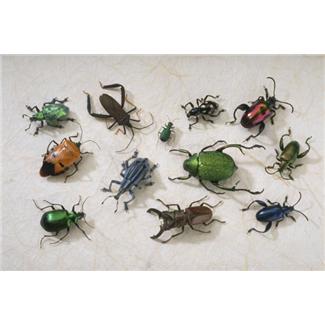
Most workers’ compensation managers do not think twice about the workers’ comp claim for the employee stung by a bee or bitten by a flea. It is usually a first aid only claim or at worse, a medical only claim, right? Wrong! While the majority of claims for biting and stinging insects or spiders (spiders are not insects, they have 8 legs and are technically classified as arthropods) will be minor, there can be some nasty injury claims, especially from spider bites or multiple bees/wasp stings.
Employees that work outside like construction workers and landscapers are the most likely to encounter a bite or a sting, but warehouse workers and others who work around products or inventory where items sit stationary for a while can come into contact with insects and spiders. While office workers, retail employees, and other indoor occupations have less exposures to bites and stings, the risk manager needs to be sure the people in pest eradication do the job, or even office workers can encounter a bite or a sting.
Click Link to Access Free PDF Download
“4-Step Sequence For Effective Employee Screening, Hiring, & Placement”
People often refer to insects and spiders as poisonous, but all insects and spiders are poisonous only if they are eaten. What they are is venomous. Insects and spiders normally inject a venom into the victims either through a bite or a sting. It is the venom that creates the work comp claim, not the actual bite or sting itself.
Rarely are bites or stings serious enough to require hospitalization or are deadly, but there are known cases where people with weak immune systems, elderly or very young children have died from bites or stings. Spider bites create the most work comp claims, especially bites from brown recluse, black widow, brown widow, and hobo spiders.
When a venomous spider bites an employee, the employee will immediately know they have been bitten (has been described as feeling like an unannounced flu shot). The symptoms usually start to develop within a few minutes, but can take hours or days depending on the amount and type of venom. Symptoms will often include pain, burning sensation, itching and swelling. Other symptoms can include vomiting, dizziness, cramps, diarrhea, rash and breathing problems. Anxiety can be a side effect.
An example of a spider bite claim is the truck driver at a warehouse in Washington State assisting in loading the trailer. A few hours later while driving through Idaho, he felt what he thought was a hornet sting on his leg, as he observed hornets in the warehouse. He pulls over at the first opportunity and checks his leg. He sees a small red spot. That evening he checks the spot and it has grown to the size of a quarter. The second evening the spot is the size of a golf ball. When he woke up in pain on the third night, he had a baseball size knot on his leg that was beginning to split open. He goes to a hospital emergency room where it is surgically necessary to remove the baseball size tissue. The trucker is treated for systemic toxicity. He is advised he has been bitten by a hobo spider (located in the northwestern USA). And if he waited another day for treatment he could have died. The tissue around the wound continued to die, requiring daily debridement and wound cleaning for the next couple of weeks, followed by less frequent debridement and wound cleaning. Once the wound stabilized, the trucker had to undergo a skin graft and the time necessary for healing and a total medical expense of $15,000 with 3 months of indemnity benefits.
While a venomous spider can create a serious wound, a single hornet does not. The only trouble is when an employee gets stung by a hornet, it is usually not just one hornet. The whole hive can become agitated resulting in the poor employee getting multiple stings. A Florida landscaper was trimming an overgrown hedge when the hedge trimmers went right through the center of a hornet hive. The landscaper received multiple hornet stings. Having been previously stung by a hornet, the landscaper had an almost immediate allergic reaction including difficulty breathing, difficulty swallowing, dizziness, and fainting. He was rushed to the local hospital where a tube was placed down his throat to allow him to breathe, and he received an antihistamine and a corticosteroid.
For the risk manager, there are steps that can be incorporated into the overall safety program to reduce (but not eliminate) the risk of bites and stings. All buildings, whether an office, a factory or a warehouse, should be regularly treated by trained pest control personnel. Any openings or crevices in older buildings should be plugged, caulked or sealed to prevent insects and spiders from coming in from the outdoors. Employees working in warehouses or other storage facilities where spiders might live should be provided gloves when handling of merchandise is required.
Many bites and stings can be avoided by teaching the employees to be vigilant. Also, the employees should never place a hand where it can not be seen (underneath an item to be picked up for instance) without checking for insects and spiders. If the employee is going to be often exposed to insects and spiders, for example like the landscaper, proper clothing and gloves should be provided to protect them from exposure to bites and stings. When an employee is bitten, the best thing to do is call Nurse Triage immediately to determine what type of care is needed – emergency care or occupational clinic. Of course, for those employers with an on-site clinic, the employee will immediately be taken to the clinic for assessment and care.
Author Rebecca Shafer, JD, President of Amaxx Risks Solutions, Inc. is a national expert in the field of workers compensation. She is a writer, speaker, and website publisher. Her expertise is working with employers to reduce workers compensation costs, and her clients include airlines, healthcare, printing/publishing, pharmaceuticals, retail, hospitality, and manufacturing. She is the author of the #1 selling book on cost containment, Manage Your Workers Compensation: Reduce Costs 20-50% www.WCManual.com. Contact: RShafer@ReduceYourWorkersComp.com.
Our WORKERS COMP BOOK: www.WCManual.com
WORK COMP CALCULATOR: www.LowerWC.com/calculator.php
MODIFIED DUTY CALCULATOR: www.LowerWC.com/transitional-duty-cost-calculator.php
WC GROUP: www.linkedin.com/groups?homeNewMember=&gid=1922050/
SUBSCRIBE: Workers Comp Resource Center Newsletter
Do not use this information without independent verification. All state laws vary. You should consult with your insurance broker or agent about workers comp issues.
©2011 Amaxx Risk Solutions, Inc. All rights reserved under International Copyright Law. If you would like permission to reprint this material, contact
Info@ReduceYourWorkersComp.com.











I was bitten by a tick and now I have terrible headaches and my neck muscles are very sore. Employer not showing much interest. It happend three days ago when I found the tick attached to my elbow. Not sure how long it was attached