In 1989 the federal law known as the Worker Adjustment and Retraining Notification Act (WARN Act) went into effect. The intent of the WARN Act was to provide employees with time to plan for their future employment with another company when the employer had to do a mass layoff. The WARN Act has in many ways morphed into the Workers Compensation Claims Preplanning Act (that is not a real title), which provides ample time for dishonest employees to plan and execute fraudulent workers comp claims.
The WARN Act requires employers with more than 100 workers to give a 60 day notice before laying off workers. Employers must issue a WARN Act notice if a facility closing or other Reduction in Force (RIF) will cause more than 50 employees to be without a job. The WARN Act also applies to companies that are staggering the layoffs if the employer is laying off more than 500 employees in any 30 day period, or more than one-third of the workforce if the company has less than 500 employees. If the employer does not provide the notice timely, the employer is required to continue the pay and benefits of the layoff workers for 60 days from the date the employees are notified of the layoff. Plus, in some cases the employer can be fined $500 per day per employee for not giving the layoff notice timely. Please consult your labor law attorney for additional information on WARN Act requirements. WCxKit
Statistics show that workers comp claims spike by an average of 50 percent after a plant closing or other mass layoff is announced. This jump in claims always results in a future jump in the employer’s workers compensation premiums, as claim frequency is the primary factor in the calculation of the employer’s workers comp premium.
Unfortunately, there are times when a RIF is necessary due to a slow-down in business, a need to cut costs, a need to change the organizational structure, or a change in the company’s business strategy. However, the employer does not have to pay bogus work comp claims as a cost of doing business. There are numerous actions an employer who is planning a RIF should take prior to the announcement of the RIF. We recommend employers who must RIF employees to take the following actions.
1. Keep intentions to yourself and only communicate with those who need to know. The less time unethical employees have to plan their fraudulent claim or to think about doing so, the lower the number of bogus work comp claims.
2. If it is becoming obvious that the company needs a RIF, do not put it off. The longer you wait, the greater the distortion the rumor mill will create. The long wait provides ample time for unethical employees to not only plan their workers comp claim, but also to share their plans with other employees that would not be considering work comp fraud, until they learn others are going to file bogus workers comp claims.
3. When a RIF is announced, place a strong emphasis on the unemployment compensation benefits the employee will be receiving. Employees who are less anxious about their source of income are less likely to commit work comp fraud if they know they will have another source of income while they look for another job.
4. Learn how your state handles unemployment compensation in conjunction with workers compensation. Some states allow both at the same time, other states allow one or the other, and some states allow an offset (reduction) in workers comp benefits for employees drawing unemployment compensation.
Prepare for all workers compensation claims that may be received
5. Consult with the third party administrator (TPA) or insurer so the TPA can plan to handle the additional workers comp claims quickly so there is no waiting. If there is a delay in beginning claim investigations, the likelihood of properly defending the claim is reduced, evidence is lost and affirmative defenses are less likely. TPAs should handle these claims aggressively and early which requires sufficient staff.
6. If not already done, a "dedicated" or "designated" adjuster assigned to handle the claims for your company is needed. If you expect a large number of new workers comp claims, it is preferable to handle all of them in the same claims office. This way the claims adjusters are familiar with working conditions.
7. If you have been utilizing more than one defense firm, pick the best attorney and pre-arrange for one attorney (best) or one firm (acceptable) to handle all work comp litigation that occur after the announcement of the RIF.
8. If an employer is closing the facility or making a major remodeling, invite the defense attorney(s) to the facility so the defense attorney(s) can familiarize themselves with the facility.
9. Video record the areas/equipment/machinery that would most likely be included in any injury scenario, especially if the plant is to be renovated or demolished.
10. Video record job functions for the medical providers, especially those that would most likely be included in any injury scenario.
11. Make a list of all key personnel, managers and supervisors, including the home address, home phone number and cell phone number, who can testify if necessary.
12. Make sure all personnel records are up to date, especially health insurance records and sick time documentation (for example: the employee who took sick time for the back injury that occurred at home may now claim an aggravation of the pre-existing condition to continue the medical care and to draw indemnity benefits).
13. An exit physical should be considered especially if the employees work in a high decibel area or have been exposed to chemicals or other irritants while on the job. This action should be reviewed with your defense attorney and claims supervisor as to the benefits versus the risk.
14. An exit interview can identify potential future workers comp claims. Provide the employees with a form to complete to list any known medical condition.
15. Do not forget the employees who were already out of work and drawing indemnity benefits before the RIF announcement. Their incentive to return to work has been removed in situations where their department or plant is being closed. Every possible effort should be made to get these people back to work before the RIF.
16. Work with an offsite transitional duty vendor so that employees who are on transitional duty can be employed elsewhere until they are fully recovered and at MMI. Be prepared to place ALL employees who are on transitional duty in a paid position elsewhere. Charitable positions are also an option as is home-based employment.
It is essential that all workers comp claims reported after the announcement of a RIF be completely documented and thoroughly investigated promptly. Once the facility is closed and people and evidence is no longer available, it is much more difficult for the workers comp adjuster to handle the claim properly.
It should be noted that not all workers comp claims that occur after a RIF is announced are fraudulent. There will be legitimate injuries that occur. There also will be employees who have worked through other minor aches and strains who now feel they must report their work-related medical condition. (WCxKit)
When you are planning a large scale RIF, you will have a lot going on. The control and prevention of fraudulent work comp claims is necessary to not lose some or all of the financial benefits the company obtains from a RIF.
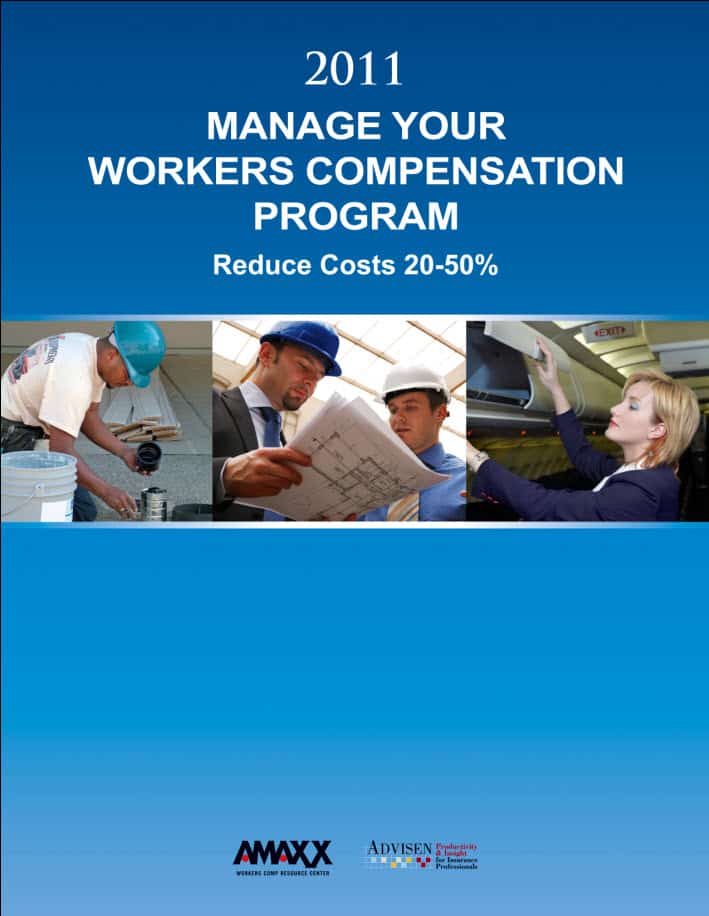
Author Rebecca Shafer, JD, President of Amaxx Risk Solutions, Inc. is a national expert in the field of workers compensation. She is a writer, speaker, and website publisher. Her expertise is working with employers to reduce workers compensation costs, and her clients include airlines, healthcare, printing/publishing, pharmaceuticals, retail, hospitality, and manufacturing. She is the author of the #1 selling book on cost containment, Manage Your Workers Compensation: Reduce Costs 20-50% www.WCManual.com.
Contact: RShafer@ReduceYourWorkersComp.com.
Do not use this information without independent verification. All state laws vary. You should consult with your insurance broker or agent about workers comp issues.
©2011 Amaxx Risk Solutions, Inc. All rights reserved under International Copyright Law. If you would like permission to reprint this material, contact
Workers’ Compensation Costs Can Be Reduced by Implementing Operational Best Practices: Learn How With This New Guidebook.
A company that wants to implement a new workers compensation program or revamp an existing system will find this book helpful. Maybe your company has recently expanded and you realize the need to train a workers compensation manager or regional coordinators how to hold down compensation costs. Whatever your need, here is the answer:
Workers Compensation Management Program: Reduce Workers’ Comp Costs 20%-50%.
Used by more than 150 firms across the country, this is THE book to help every employer develop a more effective workers compensation program to reduce workers compensation costs. It is based on field research and decades of experience in workers compensation from all aspects of the business. Best practices are described in detail for each person in the injury process.
This easy-to-read manual has been updated for 2012. It now includes:
An index for quick topic look-up so you can view a term or a procedure and see all relevant references.
NEW – Workers Compensation Basics
Purpose of Workers Compensation
Who Pays for Workers Compensation?
Parties Involved in Workers Compensation
Benefits for the Employer
Independent Contractors
Benefits for the Employee
Injuries Covered
Types of Workers Compensation
How Losses are Categorized
How Losses are Reported
Calculating Your Premium
How Mod Effects Your Premium
Good/Bad Mod Example
Five Ways to Reduce Your Mod
NEW – Fundamentals of Cost Containment
Reasons Workers Compensation Costs are High
Who is in Charge?
Work Ability Form Properties
Who is Responsible for Managing Workers Compensation Claims?
Who is Responsible for Managing Workers Compensation Process?
Hidden (Indirect) Costs of Workers Compensation
Additional Costs
Calculating WC Costs
External Obstacles to Cost Control
Internal Obstacles to Cost Control
NEW – Working with Your Adjusters or TPA
Account Handling Instructions
MD Participation
NEW- Reporting a Claim
Critical Issues
Essential Intake Considerations
Nurse Triage
NEW- Directing Medical Care
Occupational Health Clinics
Remote Health Services
Directing Medical Care in California
NEW- Return to Work
What to Include in a Transitional Duty Policy
Non-Profit, Volunteer or Charitable Positions
Employees Who Never Return to Work
Coordinating WC with Federal and State Leave Statutes
NEW – Other Indemnity Cost Containment Services
Telephonic Disability Intervention
NEW – Medical Cost Containment
URAC Certification
Mental Health RNs
Chronic Pain Programs
An Aging Workforce
At Home Recovery Services
Medical Fee Schedules
Fee Schedule Coding
ICD-9 and CPT Codes
NEW- Physical Therapy and Physical Rehabilitation
Differences between Physical Rehabilitation Programs
Pharmacy Benefits Management Program
Authorized Drug Formulary
Toxicology Screening
NEW – Fighting Fraud and Abuse
Medical Terminology Used to Identify Malingering
Reviewing Investigation Reports and Videos
Avoid good Day/Bad Day Syndrome
NEW – Claims Resolution and Settlements
Conditional Payment and Final Demand
Pharmacy Component of MSA
California Settlement Process
A 183-page guide covering how to assess your workers compensation program, design program materials, roll out a program to the organization, and monitor and manage the program once implemented.
Written by a national expert on workers compensation cost containment with over 25 years experience helping companies reduce their losses 20% to 50%.
T. Ronca, a workers’ compensation defense attorney from Long Island, NY, said the
book is an invaluable desk reference. “It is one of the tools that should never be out of reach for a risk manager. Direct employer involvement with claims in the first weeks is the difference between success and failure. This manual will guide the conscientious employer through the pitfalls,” Ronca said.
What’s more, the book can be delivered with your company logo on the cover and a full-color ad for your company on the back cover.
Take it out to the field. Text tabs are available to put on each chapter and it is ready to go as your company training manual. All you will have to do is customize the Training Agenda that is in Part I of the book.
Included in the manual are topics such as: Return to work and transitional duty, claim reporting, employee communications, controlling fraud and abuse, directing medical care, medical cost containment solutions, post injury response procedures, reporting procedures, working with your carrier and third party administrator. There is information about physical therapy, pharmacy benefits management programs, training supervisors and gaining management commitment. It also contains concepts of claim settlement and resolution as well as safety and loss control. New areas are identified above.
There are 5 sample worksheets in the manual to help organize an efficient workers’ compensation program. These include: timetable for implementation, the injury coordinator job description, and several sample roll-out letters. We recently received a terrific phone call from a third-party administration firm saying how the manual provided an organized way to train clients at loss prevention and has helped their clients put "layers of better WC management" in place. Everyone benefited.
One large distribution firm wrote to us to say the chapter on safety and loss control led to a company-wide safety change that only cost a few hundred dollars but prevented a specific type of injury that had been draining its budget, says Rebecca Shafer, Esq., President of Amaxx Risk Solution, Inc. who authors the book. Shafer is a national expert on workers’ compensation cost containment with more than 25 years of industry experience helping many companies reduce their losses 20-50%.
When you order your copy of Manage your Workers’ Compensation Program from Advisen at
http://corner.advisen.com/wcbooks, the 183-page guidebook shows how to assess your program, design program materials, roll-out a program to the organization, and monitor and manage the program once implemented.
The workbook is also available with a customized front and back cover for bulk purchases. Discounted rates apply to bulk orders.
One company said, "After reading the manual, we took a look at past workers comp practices and saw that every department did things differently. Manage Your Workers’' Compensation Program 2012 gave us the guidance we needed to standardize our workers’ compensation programs across the country. It was like a pre-prepared lesson plan," according to the risk manager.
A regional hospital in North Dakota wrote that, "Our small company expanded rapidly and we actually didn’t have any official workers’ compensation program in place. This manual gave us step-by-step procedures from the first meetings with management to monitoring the final program. Buying and reading the book was almost like hiring another employee – one who was an expert in workers’ compensation."
Who Uses the Workers’ Compensation Book?
Risk Managers and Workers’ Comp Managers find it useful learning about the cost containment niche and use it for themselves and to bringing new team members up to speed very quickly. The book becomes a “lesson plan” tool.
Safety Directors use the book to train supervisors in workers’ compensation claims management. They learn more about their area of responsibility — post loss cost containment — adding to their overall knowledge. They also learn what to do after an injury and what steps are supposed to take place during the first 24 hours.
Brokers use it for prospects, as well as, to learn about specific aspects of cost containment, passing their knowledge on to their clients. For example, when discussing how to develop a return-to-work program and a client asks about, “off-site return-to-work programs,” the broker quickly finds the relevant section in the book, reviews it and passes the answer on to the client, along with a copy of the cost containment book with the broker’s logo.
Adjusters use the book to gain a better understanding of the employer’s perspective. Adjusters also want to learn more about cost containment to add to their overall workers’ compensation knowledge in order to grow their careers and stay abreast of new services.
Account Producers give the book to prospects during formal presentations to illustrate their company is on top of the workers’ compensation industry. The book makes an excellent client gift.
Vendors such as doctors, physical therapy networks, occupational clinics and medical management firms learn how their service might fit into the workers’ compensation marketplace, what is important to employers, and what they look for in medical services to enable the vendors to enter the workers’ compensation marketplace.
The manual is a cost-cutting tool to learn more about systematic and operational techniques for reducing workers compensation costs.
Author Rebecca Shafer, JD, President of Amaxx Risk Solutions, Inc. is a national expert in the field of workers compensation. She is a writer, speaker, and publisher. Her expertise is working with employers to reduce workers compensation costs, and her clients include airlines, healthcare, printing/publishing, pharmaceuticals, retail, hospitality, and manufacturing. She is the author of the #1 selling book on cost containment, Workers Compensation Management Program: Reduce Costs 20% to 50%. Contact: RShafer@ReduceYourWorkersComp.com.
Do not use this information without independent verification. All state laws vary. You should consult with your insurance broker or agent about workers comp issues.
©2012 Amaxx Risk Solutions, Inc. All rights reserved under International Copyright Law. If you would like permission to reprint this material, contact us at: Info@ReduceYourWorkersComp.com.

Posted in
Claim Audits & File Review,
Communication with Employees,
Coordinating Medical Care,
Federal Workers Compensation,
Fraud and Abuse,
Insurance Issues, Rates, Premiums,
Lowering Premiums & Experience Mod,
Management Commitment,
Medical Cost Containment & Managed Care,
Medicare Set Asides (MSAs),
Professional Development Issues,
Return to Work and Transitional Duty,
Risk Management,
Safety and Loss Control,
Settling WC Claims,
TPA and Claims Administration,
WC 101,
WC in Other Countries (International) |
United States Attorney Benjamin Wagner announced that Chief United States District Judge Anthony Ishii sentenced 44 year-old Karina S. Beard of Turlock, California to one year in prison, to be followed by three years of supervised release, for four counts of mail fraud and two counts of federal workers compensation fraud. Beard was also ordered to pay $81,694 in restitution.
According to court documents, Beard worked as a distribution and window clerk for the Postal Service in Groveland. For two plus years, Beard received federal workers comp benefits for an on-the-job injury. Because of her claimed injuries, restrictions were placed on Beard's physical activities: no reaching, no pushing, no pulling, no driving for more than 20 minutes, etc.
Yet, Beard performed various physical tasks, such as horseback riding, caring for horses, yard work, and driving all using the purportedly injured part of her body. Because of claims Beard made in routine Department of Labor questionnaires, she continued to receive workers comp benefits, all while not entitled to such benefits. (WCxKit)
At least once a year the U.S. Department of Labor’s Office of Workers Compensation Programs is required to ask every total disability benefit claimant whether the claimant has had any employment, earnings, or changes in their medical condition over the previous 15 months. In compliance with regulations, OWCP sends out a questionnaire to each claimant. Claimants reporting changes in employment, earnings, or their medical conditions on the questionnaire may experience a reduction or termination of benefits.
Do not use this information without independent verification. All state laws vary. You should consult with your insurance broker or agent about workers comp issues.
©2012 Amaxx Risk Solutions, Inc. All rights reserved under International Copyright Law. If you would like permission to reprint this material, contact us at: Info@ReduceYourWorkersComp.com.
The Federal Employees Compensation Act (FECA) covers 2.7 million federal employees and postal workers and paid out $1.9 billion in wage-loss compensation, impairment and death benefits and $898 million in medical and rehabilitation services and supplies during the 2010 charge back year, which ended June 30, 2010.
There have been no major revisions to the law since 1974. Currently there are two bills pending. Both would put in place a few significant changes. “The Federal Workers Compensation Modernization and Improvement Act” (HR 2465), was passed in the House and has been sent to the Senate Committee on Homeland Security and Government Affairs. Another proposal that originated in the Senate, “The 21st Century Postal Service Act of 2011” (S1789) has made it out of committee. Both include significant provisions related to FECA reform.(WCxKit)
THE 21ST CENTURY POSTAL SERVICE ACT OF 2011 (S 1789)
There are several provisions in the current version of the bill that would have a material impact on the claimants and the manner in which claims are managed. Section 302, Federal Workers Compensation Reforms for Retirement Age Employees, will reduce total available compensation rates and re-define coverage at and beyond retirement age. This particular provision would have a positive effect on cost as well as remove any notion that FECA is a retirement plan.
This legislation also includes provisions that are directly related to case management; one in particular supports increased involvement by the employing agency in managing its’ workers compensation claims. This provision requires an independent medical assessment of disability and potential for return to work for beneficiaries after six months of disability and on a regular basis thereafter.
Currently, federal agencies do not have the authority to schedule or direct the scheduling of independent medical evaluations. They can request that the Department of Labor set up an exam, but the final decision on whether and when to refer for an IME (independent medical evaluation) is in the hands of the claims examiner (DOL). In addition to requiring periodic scheduling of independent medical evaluations by the DOL, the current draft of the proposed legislation provides a mechanism for the employing agency to direct the scheduling of an IME, subject to review of the request by the Secretary of Labor.
The complementary piece of legislation that has passed the House is THE FEDERAL WORKERS COMPENSATION MODERNIZATION AND IMPROVEMENT ACT (HR 2465), which among other things would streamline the claims process for those workers who sustain a traumatic injury in a designated armed conflict zone, would permit physician assistants and nurse practitioners to certify disability for traumatic injuries and ensure that they are reimbursed for their services, and would allow the Department of Labor to verify federal employees salaries against social security administration data, all of which will modernize and streamline administration of FECA benefits.(WCxKit)
PRESCRIPTION OPIOID ABUSE
One significant industry-wide issue that is not explicit to either piece of proposed legislation is prescription opioid abuse. Prescription opioid abuse is being addressed in most workers compensation systems by establishing controls on prescribing with the help of Pharmacy Benefit Management (PBM) programs. In the federal workers compensation system, only the Department of Labor has the authority to adjudicate claims, including those for ancillary services, which limits the employing agency’s ability to control the inappropriate use of pharmaceuticals.
Although federal agencies can, and a few do, hire PBMs to help address the efficacy and cost of prescription drugs, neither the agency nor the PBM have the authority to place any limits on prescribers or fulfillment beyond those established by OWCP, which are extremely limited. It is hard to imagine how the federal workers compensation system, which provides workers compensation coverage for almost 3 million workers, is going to be able to handle the opioid epidemic without a significant change in policy related to the use of formularies and other preventive controls applied at both the benefit level and the point-of-sale.
Authors Lisa M. Firestone, MHSA and Marianne Cloeren, MD, MPH, FACOEM provide services at Managed Care Advisors, Inc. (MCA) an innovative, woman-owned business specializing in workers' compensation, employee health benefits, disability management consulting, and full service workers compensation case management. Based in Bethesda, Maryland, MCA services customers throughout the United States and U.S. Territories. Visit the MCA’s website www.MCACares.com.
Lisa M. Firestone, MHSA is the company’s president and owner and brings her 30 years plus experience to the healthcare industry. She is a recognized expert in the areas of employee benefit program development, evaluation, and strategic planning. She has been actively involved in the evolution of workers’ compensation case management and disability management programs, most recently focusing on the federal workers’ compensation and disability systems. She can be reached at lfirestone@managedcareadvisors.com.
Marianne Cloeren, MD, MPH, FACOEM Medical Director of MCA where she supports the company’s federal workers’ compensation case management services, oversees quality assurance, and develops educational offerings related to disability management and evaluation. Dr. Cloeren’s experience includes managing employee health in the Veterans Administration system, serving as medical director for several companies, and as an occupational medicine physician for the Army’s Center for Health Promotion and Preventive Medicine, where her focus was federal workers’ compensation case management. She can be reached at mcloeren@managedcareadvisors.com.
Do not use this information without independent verification. All state laws vary. You should consult with your insurance broker or agent about workers comp issues.
©2011 Amaxx Risk Solutions, Inc. All rights reserved under International Copyright Law. If you would like permission to reprint this material, contact Info@ReduceYourWorkersComp.com.
Few people realize the workers’ compensation industry is actually 100 years old. It’s one of the most-successful public-private partnerships in U.S. history.
Since 1983, the Workers Compensation Research Institute
(WCRI) has been providing the public with research on WC public policy issues. Based in Cambridge, Mass., the organization includes among its members employers, labor organizers, public and private insurers, health care providers, managed care companies, and state government representatives from the U.S., Canada, New Zealand, and Australia.
Dr. Richard Victor, WCRI executive director, oversees the institute’s studies and analysis that has added ammunition for the reforms to various aspects of the workers' comp system. Prior to working at the institute, he spent seven years conducting research at The Rand Corporation in Washington , D.C., and Santa Monica , Calif. His law degree and Ph.D. in economics is from the University of Michigan.
LowerWC recently asked Victor for his impressions of the industry. What follows are some of his comments:
“One of the most important, and troubling, areas for workers’ compensation systems is to find the appropriate ways to use narcotics – and to discourage abuse and diversion. A second critical issue is to find new and innovative ways for help workers return to productive employment,” Victor says.
To this end, WCRI is conducting several research phases to help find answers for WC narcotic use and return-to-work issues, he says.
Victor says the latest trends in workers’ compensation also include medical cost management. “Medical costs now represent more than half of workers’ compensation costs in most states. There is increasing focus on pharmaceutical costs and utilization and the payments made to hospitals and ambulatory surgery centers,” he says.
Further, everyone wants to know how to save the employers money. Victor says, “Most large employers are focused on three legs of the four-legged cost containment table – risk financing, injury prevention, and claim management. The fourth leg is a large opportunity because employers have underinvested in it – improving the ‘rules of the game’ to make the system more effective for workers and more cost effective for employers.”
He continues, “This requires that employers join together to formulate political positions and strategies and gather available evidence about how a given state system is performing, how it might be improved, and what lessons can be learned from other states.”
California and Texas are good examples of where employers have taken collective action and costs have fallen significantly, Victor says. One of the chief objectives of the WCRI CompScope benchmarking studies is to help stakeholders and public officials set priorities and debunk myths.
One important part of this research is an upcoming conference. The WCRI Annual Issues and Research Conference will be Nov. 16-17 in Boston with keynote speaker Peter Barth, professor of economics emeritus at the University of Connecticut. This will be its 28th year.
The goal there to present new ideas and alternative views, Victor says. “Whether you are managing workers’ compensation claims, involved in strategic planning, concerned with medical costs and utilization, or just looking for a better understanding of workers' compensation – this is the conference for you.”
All of the sessions highlight the first presentations of the latest research findings from WCRI while drawing upon the diverse perspectives of highly-respected workers’ compensation experts and policymakers from across the country, he says. “Attendees tell us that they value the large attendance because it allows them to leverage their time while at the conference. There are also opportunities to meet and interact with WCRI researchers.”
“The most important advice I can give remains a secret until the WCRI conference, when I (present) ‘The Elephant in the Room.’ It will highlight some things that are underappreciated, but are likely to shape workers’ compensation systems for the next decade. The future is not always like the past,” Victor says. “Of course, I would like to see your readers attend to stretch their thinking, gain a competitive edge, and network with peers.”
Author Rebecca Shafer
, JD, President of Amaxx Risk Solutions, Inc. is a national expert in the field of workers compensation. She is a writer, speaker, and website publisher. Her expertise is working with employers to reduce workers compensation costs, and her clients include airlines, healthcare, printing/publishing, pharmaceuticals, retail, hospitality, and manufacturing. She is the author of Manage Your Workers Compensation: Reduce Costs 20-50% on cost containment techniques. www.WCManual.com.
Contact: RShafer@ReduceYourWorkersComp.com.
Do not use this information without independent verification. All state laws vary. You should consult with your insurance broker or agent about workers comp issues.
©2011 Amaxx Risk Solutions, Inc. All rights reserved under International Copyright Law. If you would like permission to reprint this material, contact

Posted in
Assessment & Diagnostics,
California Workers Comp,
Communication with Employees,
Drug, Alcohol & Impairment Testing,
Employment Law Issues,
Federal Workers Compensation,
Implementation and Rolling Out Your Program,
Management Commitment,
Professional Development Issues,
Return to Work and Transitional Duty,
Seminars and Courses |
The U.S. Department of Transportation issued a final rule limiting the number of consecutive hours passenger railroad workers can be on the job. The new Federal Railroad Administration (FRA) regulation will differentiate between freight and passenger service.
According to the DOT this rule recognizes the difference between work during daylight hours and work during nighttime hours when fatigue is most likely to occur.
The final rule includes:
1. Maximum on-duty periods and minimum off-duty periods for passenger train employees including locomotive engineers, and conductors.
2. Requirements for railroads to identify schedule-specific risks of fatigue using an approved, scientifically validated, and calibrated bio-mathematical model of human performance and fatigue.
3. Requirements for railroads to develop and carry out plans to mitigate fatigue risks before safety may be compromised. The final rule also requires railroads to submit certain work schedules of their passenger train employees and fatigue mitigation plans to FRA for approval, and to provide fatigue training. (WCxKit)
The final rule will become effective on Oct. 15, 2011.
Author Robert Elliott, executive vice president, Amaxx Risk Solutions, Inc. has worked successfully for 20 years with many industries to reduce Workers Compensation costs, including airlines, healthcare, printing/publishing, pharmaceuticals, retail, hospitality and manufacturing. See www.LowerWC.com for more information. Contact: Info@ReduceYourWorkersComp.com.
Do not use this information without independent verification. All state laws vary. You should consult with your insurance broker or agent about workers comp issues.
©2011 Amaxx Risk Solutions, Inc. All rights reserved under International Copyright Law. If you would like permission to reprint this material, contact Info@ReduceYourWorkersComp.com.
The U.S. Department of Labor Occupational Safety and Health Administration (OSHA) cited Marshfield Door Systems Inc. with one repeat and two alleged serious violations after a worker's hand was trapped in an ingoing nip point on a conveyor belt line in March. The accident resulted in contusions, abrasions, and friction burns. Proposed penalties total $46,200.
"Installing proper machine guarding is a basic safety precaution that Marshfield Door Systems should have taken for the protection of its workers," said Kim Stille, OSHA area director in Madison. "We are committed to ensuring that employers adhere to OSHA's common-sense standards in order to prevent avoidable injuries, such as this one." (WCxKit)
The repeat violation was cited for failing to train workers in lockout/tagout procedures to control energy sources for equipment on conveyor belt line number one and carries a proposed penalty of $33,000,. A repeat violation exists when an employer previously has been cited for the same or a similar violation of a standard, regulation, rule or order at any other facility in federal enforcement states within the last five years. Marshfield Door Systems was also cited for failing to provide training on lockout/tagout procedures in 2009.
The serious violations are failing to inspect energy control procedures within the past year and to install guarding to protect workers from an exposed nip point on the conveyor. This carries a proposed penalty of $13,200, A serious violation occurs when there is substantial probability that death or serious physical harm could result from a hazard about which the employer knew or should have known.
(WCxKit)
Prior to OSHA's most recent inspection in March following the injury, the Marshfield-based company was inspected 13 times since 2001. Those inspections resulted in 27 citations, including some for violations of lockout/tagout and machine guarding standards.
Author Robert Elliott, executive vice president, Amaxx Risk Solutions, Inc. has worked successfully for 20 years with many industries to reduce Workers Compensation costs, including airlines, healthcare, printing/publishing, pharmaceuticals, retail, hospitality and manufacturing. See www.LowerWC.com for more information. Contact: Info@ReduceYourWorkersComp.com.
Do not use this information without independent verification. All state laws vary. You should consult with your insurance broker or agent about workers comp issues.
©2011 Amaxx Risk Solutions, Inc. All rights reserved under International Copyright Law. If you would like permission to reprint this material, contact Info@ReduceYourWorkersComp.com.
Eight out of 10 employers cite leave law administration as their most difficult human resource activity given the myriad of overlapping leave laws and potential million-dollar claim disputes. A new searchable online reference tool, providing accurate and complete information on federal Family and Medical Leave Act (FMLA), state Family Medical Leave (FML), and other leave laws was recently launched by Reed Group, MDGuidelines.
Leave of Absence Advisor simplifies the tangled web of state and federal leave laws. Users can search by keyword, browse by category or specify state and leave reason, and also obtain information on corresponding best practices by Reed Group’s return-to work and leave law experts. The result is easier leaves administration, reduced risk of costly compliance errors, and increased confidence that employees are receiving the appropriate leaves when personal difficulties arise.
“No human being can possibly understand, interpret, and apply overlapping regulations in multiple jurisdictions while in the daily process of approving and administering leaves,” says Jon Seymour, MD, Reed Group President, Guidelines. “Leave of Absence Advisor is a critically needed tool for navigating that complexity. (WCxKit)
Chief Compliance Officer Martha J. Cardi says Leave of Absence Advisor users can rest assured its content is the most up-to-date information available.
“Our content is in full compliance with the multitude of state and federal leave laws,” Cardi, a recognized expert in employment and leave law, said. “We track leave of absence legislation throughout the country and implement changes into all of our products and services on an on-going basis. Users will benefit immediately from this competency when they use Leave of Absence Advisor.”
Everyone involved in return-to-work matters can benefit from using Leave of Absence Advisor, including employers, insurers, third party administrators, attorneys, government entities, and employees. (WCxKit)
For more information and a free demonstration of MDGuidelines Leave of Absence Advisor, phone Reed Group at 866-889-4449 or email
mdguidelines@reedgroup.com.
Reed Group®, headquartered in Colorado, is the world’s most trusted source of return-to-work information, helping companies improve employee absence outcomes. Contact 866.889.4449 or email
jnelson@reedgroup.com; at
www.reedgroup.com.
MDGuidelines is the disability industry’s leading return-to-work reference toolset. Available as a web-based resource or integrated with the user’s IT system, MDGuidelines offers real-world and idealized return-to-work durations with advanced predictive modeling. Visit
www.mdguidelines.com.
Do not use this information without independent verification. All state laws vary. You should consult with your insurance broker or agent about workers comp issues.
©2011 Amaxx Risk Solutions, Inc. All rights reserved under International Copyright Law. If you would like permission to reprint this material, contact Info@ReduceYourWorkersComp.com.
After the New York City World Trade Centers fell, images of responders rushing in unprotected to help victims of the terrorist attach Sept. 11, 2001, are burned into the memories of every American.
Discussion loomed immediately about toxins in the air from particulate matter, burning materials, airplane fuel and more. Of course there was nothing victims could do to protect themselves and first responders, in a rush to help as quickly as possible, did not stop to assess the danger they put themselves in.
Now, a National Institute for Occupational Safety and Health (NIOSH) report indicates there is not enough evidence to link the collapse of the World Trade Center (WTC) towers to cancer in responders and survivors. The study means those groups will not be able to collect federal money for treatment or compensation
However, the report also does not indicate evidence of the absence of a causal association. And another review is scheduled for early 2012.
Under the James Zadroga 9/11 Health and Compensation Act of 2010, there must be periodic reviews of scientific and medical evidence. If a causal association were established, recovery workers and others with cancer diagnoses could be compensable.
The Zadroga Act provides funds for a specific list of illnesses, such as asthma and other respiratory diseases linked to the 911 attacks. Cancer could be included if a link was found.
The initial review was based on three information sources, according to NIOSH:
1. A systematic search of peer-reviewed findings on exposure and cancer resulting from the terrorist attacks that have been published in the scientific and medical literature between Sept. 11, 2001, and July 1, 2011.
2. Findings and recommendations related to cancer from the WTC Clinical Centers of Excellence and Data Centers, the WTC Health Registry at the New York City Department of Health and Mental Hygiene, and the New York State Department of Health.
3. Information from the public solicited through requests for information published in the Federal Register earlier this year.
The report said there was little evidence because few published research studies on the attack mention cancer and only a small number of those are peer-reviewed. Further, cancer is a common disease, making linkage difficult, the report said. (WCxKit)
Author Rebecca Shafer, JD, President of Amaxx Risks Solutions, Inc. is a national expert in the field of workers compensation. She is a writer, speaker, and website publisher. Her expertise is working with employers to reduce workers compensation costs, and her clients include airlines, healthcare, printing, publishing, pharmaceuticals, retail, hospitality, and manufacturing. See www.LowerWC.com for more information. Contact: RShafer@ReduceYourWorkersComp.com.
Do not use this information without independent verification. All state laws vary. You should consult with your insurance broker or agent about workers comp issues.
©2011 Amaxx Risk Solutions, Inc. All rights reserved under International Copyright Law. If you would like permission to reprint this material, contact Info@ReduceYourWorkersComp.com.
It’s been nearly 40 years since the federal workers compensation program has received any updates, but now, thanks to the U.S. House Committee on Education and the Workforce, the Federal Workers Compensation Modernization and Improvement Act (H.R. 2465) has passed.
The unanimously passed bill, known as FECA, according to committee reports, “updates the federal workers compensation program to better protect taxpayer resources and modernizes benefits to reflect the realities of today’s economy.”(WCxKit)
Since 1916, a federal program has provided compensation benefits to federal employees who become injured or ill through a work-related activity.
“I am pleased we’ve been able to work together and move forward with commonsense reforms that will improve the efficiency of the federal workers compensation program and promote better use of taxpayer dollars,” said Chairman John Kline (R-MN). "Leaving government programs on auto-pilot for decades is simply unacceptable.”
George Miller (D-CA), senior Democrat of the committee said, "The legislation will make important program integrity improvements and will update benefit levels not adjusted for inflation since 1949. I agree with the majority that other programmatic changes recommended by the administration require further examination.”
According to the Committee, H.R. 2465 will reform the federal workers compensation program by:
1. Enhancing efficiency to ensure the program reflects best practices in medical treatment and developments in the workforce.
2. Improving integrity by granting greater authority to the Department of Labor to verify workers’ earnings.
3. Modernizing the benefits federal workers receive to ensure the assistance they need reflects the realities of today's economy.
The report notes that committee leaders also requested a comprehensive review from the Government Accountability Office (GAO) of additional reforms that may be needed to strengthen the program and the impact of the potential reforms on beneficiaries. (WCxKit)
“FECA is the safety net for over 2 million federal workers who are injured or killed on the job, and the bill we are introducing today strengthens the law," said Lynn Woolsey (D-CA), senior Democrat of the Workforce Protections Subcommittee. "As we heard from many witnesses at a May 12 Committee hearing, more analysis is needed before we consider the proposed cuts to benefits for permanently injured workers and their survivors. So I am pleased there is a bipartisan effort to secure GAO’s input before we embark on further legislative efforts.”
To learn more about H.R. 2465, click
here. To read the legislative text of H.R. 2465, click
here.
To learn more about the federal workers compensation program, click
here.
Author Rebecca Shafer, JD, President of Amaxx Risks Solutions, Inc. is a national expert in the field of workers compensation. She is a writer, speaker, and website publisher. Her expertise is working with employers to reduce workers compensation costs, and her clients include airlines, healthcare, printing, publishing, pharmaceuticals, retail, hospitality, and manufacturing. See www.LowerWC.com for more information. Contact: RShafer@ReduceYourWorkersComp.com.
Do not use this information without independent verification. All state laws vary. You should consult with your insurance broker or agent about workers comp issues.
©2011 Amaxx Risk Solutions, Inc. All rights reserved under International Copyright Law. If you would like permission to reprint this material, contact Info@ReduceYourWorkersComp.com.